Dressing down day

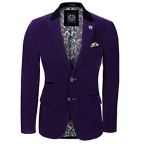
purple suit

I’m unsure when dress down days were introduced.  If you’re a bloke, it was a hard thing to convert to.  Simply talking off a tie (which you’d worn for several working decades prior) isn’t really dress down.

Despite working in the City, I never wore a bowler hat (the intricate folding of the accompanying umbrella failed me miserably) but I did wear a suit and tie for years.

My first suit was purple (it was 1974!) – a strange choice given my only eye ailment is myopia rather than colour-blindness! Deep Purple were a fashionable group at the time, but the eponymous name didn’t translate well into work clothes.  Many fellow travellers thought I must be a bishop in mufti.

During the early days of dress down you got an insight as to what people looked like at weekends. Posh people would wear cords, the colour of which, made my purple look surprisingly normal.  Posh people also wear shoes (loafers which have seen better days, but that’s how the rich get rich) with no socks – a sure-fire way of contracting pneumonia!

Before ties were deemed unnecessary in the workplace there was competition within workers as to who had the best tie. This contest became null and void when workers from the suburbs would visit with their ties adorned with Homer Simpson, Taz of Tasmania or any Thunderbird pilot!

Virgil Tracy always beats anything from Hermes.

The term “smart casual” has entered our vocabulary. However, initially this was misinterpreted as I remember one day arriving at work and a fellow worker had dressed in army combats.  He looked like he was more likely about to invade Angola rather than help out with some filing!

Weather or not

rain hat

If my surname was Fish then I think I’d probably be somewhat the wiser; although, given its current misbehaviour, as far as weather prediction is concerned, I might as well be Captain Haddock.

Growing up in London in the 60s & 70s it was cold in 1962/63 and hot in 1976, you also knew the next day would be the same; not these days. Is it because we all used too much Harmony hairspray or Brut anti-perspirant during this period?

Clothing, to cope with the changes in temperature, is different too. In the 60s we had duffel coats, a plastic rain hat and a mac with a belt you could tighten so much it was like wearing a Victorian corset (I never had a rain hat as a kid as I wasn’t allowed plastic near my mouth).

Today you can have multi-layer coats – usually made by unpronounceable named Teutonic companies – the harder the maker’s name is to articulate the warmer it’ll keep you.

To cope with the unseasonable heat, we are now seeing more public water dispensers. I don’t quite know when bottled water was invented, but certainly wasn’t evident in Balham in the 60s, unless you include the two water fountains in my school playground – who can’t forget the “refreshing” feeling, after a successful and energetic game of three-and-in, of the dribble of luke-warm water emanating from the playground fountain?

If it’s windy – eat less cabbage.

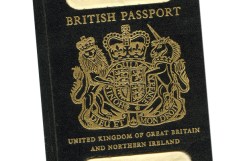
Passport to Puerto Banus

passport

Summer holidays in the 60s did not start at Palma, Penzance nor at Puerto Banus; they began at Petty France.

A trip to London as an 11-year-old in 1968 to get a passport was exciting as we passed New Scotland Yard, where I hoped to steal a glimpse of Shaw Taylor, Stratford Johns or Officer Dibble.

The need for passports was to enable my parents and I to travel to Majorca; I couldn’t find Majorca in the London A-Z, so assumed it must be abroad.  As we waited in the interminable queue, and my parents practised their pigeon Majorcan, I wondered if there was a Significant France, which had more counters and fewer queues?

What passports don’t take into account is fashion – nor differing hair lengths through the ages.  You keep your passport for a decade and, sometime into the eighties, there was a part of people’s passports which was forever Les McKeown.

They do say, if you look like your passport photo you’re too ill to travel.  But neither can you smile; if you wear glasses you must be photographed without them. Because of retina recognition at Passport Control; if you wear glasses (as I do) you must remove them.  I now grope my way officially back into the UK like Mr Magoo!

These days passports can be renewed online.  However, there is the inherent danger of also visiting Amazon, Ocado or eBay. A consequence of which is you may receive a used passport the next day for £1, a substitute passport as they’d run out of the original or you’ve sold yourself to a man who’s coming round later to collect you!


Snooker loopy

snooker

I wanted to be Joe Davis when I was growing up; the five-foot folding snooker table, which took up 90% of my bedroom, was the investment I needed to help this dream materialise; I already had comedy glasses.

As I grew older, and was allowed out of my bedroom unaccompanied, I discovered, during the 60s and 70s, there were as many snooker halls then as there are Prets and Costas now!

Many were above Burton’s, meaning you could buy a suit and get a century break (Ok, eight) within the same building.

Many halls were temperance; the strongest drink you could get was black coffee – unless you included WD40 for the squeaky doors – although this doesn’t mix too well with Bovril.

The greatest expense, aside from the table hire, were pieces of chalk. I’d always forget my chalk and collected over 100 small, used-only-once, blue cubes;  I finally ground them down and gave them to my mother stating they were the new, exotic range of Bronnley bath salts.

Snooker was made popular in July 1969 with the introduction of Pot Black.  The thrill of this game was somewhat negated as a majority of UK TVs in 1969 were still black and white; thus meaning the grey ball scored one as well as seven – given the vertical hold on the TV was always on the blink in my flat, I always thought snooker was played at sea during a force ten gale.

My favourite player, once colour TV was more prevalent, was Perrie Mans; he, like me, had clearly made his waistcoats out of discarded curtains! Although, being professional, he’d have removed the hooks!


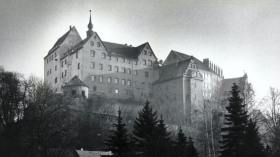
Hotel du Lack

colditz

Due to a pathological fear of cheese, I’d have never have made it as a chef

Having failed a vast majority of my O-levels in 1973, my father took me to an industrial psychologist in Gloucester Place to establish which career I should pursue: Astronaut was out due to a morbid dread of flying; postman was never an option due to a teenage propensity to getting verrucae and the role of Prime Minister was already taken by Ted Heath – although I did hoard candles – handy during the three-day week power cuts.

At the psychologists I was given a series of tests: one was a list of hundred potential occupations, grouped in pairs. I had to choose one of the two.  One couple was bishop or miner?  This was a no-brainer as I don’t like getting dirty and as a choir-boy looked quite charming in cassock and surplice.

Lastly, I had an interview with the psychologist who, having analysed the results, and me assuming I’d be a shoo-in for the next Archbishop of Canterbury, suggested a career in hotel & catering.

I had immediate visions of running a hotel but suddenly realised I’d have to start at the bottom and wouldn’t have suited being dressed as a chambermaid – I haven’t got the legs.

And so, went into advertising – where you don’t have to wear a pinny – unless the client is particularly demanding.

So, what was room service’s loss became the world of conning people into buying something they really don’t want’s gain!

You can check out any time you like, but you can never leave! Unless you don’t want your ten-bob deposit back!

Finger lickin’

penny_black_vr

My walk to school in the late 60s would, every day, take me past a stamp shop.  The shop, near Tooting Bec Station, was next to a baker’s, where the smell emitting from the bakery was so foul I was drawn ever nearer to the stamp shop next door for comfort and often considered collecting stamps.

My dilemma was not knowing the difference between a Penny Black stamp and a Green Shield one (although I look back and think, if I’d owned a Penny Black, I wouldn’t have needed to lick as many Green Shield stamps as I did to collect the required amount for a flannelette sheet).

I would, most Saturdays, journey to the stamp shop, with a peg on my nose to avoid the acrid smell emanating from the next-door bakery, to buy some stamps.

I bought an album, a set of hinges and an implement which you dipped the hinges in, so you didn’t die of thirst with too much licking (I nearly bought one using Green Shield stamps but had dehydrated by the time I got to the shop in Clapham Common).

I quickly realised that my half a crown pocket money was never going to buy a Penny Black (or even a perforation off one) so my plan B was to buy stamps with modes of transport on.  Most people would collect stamps from specific countries (or Penny Blacks), but I was content with stamps with Concorde on or the occasional hovercraft.   My album consequently had no value, but I believed it could float on water or travel at super-sonic speeds.

It was only when I was older that I discovered the official word for collecting stamps was fellatio; more of that next week when I talk about my rare Blue Mauritius!

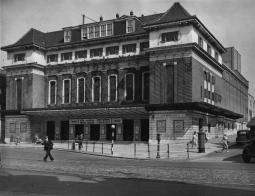
River deep, Streatham High (Road)

streatham4

In the 60s, my mum took me twice to the Streatham Odeon: once to see Mary Poppins and once to see The Supremes.

I saw them both in quick succession and wondered, halfway through Love Child, why Julie Andrews wasn’t in the line-up?  And why they ended the concert singing Baby Love and not A spoonful of sugar?

When I saw The Supremes, Diana Ross had left the group to commence a career starting World Cup Finals and I thought I was well within my rights to expect the expert nanny, together with her magical umbrella to be on the stage singing You can’t hurry love. (This song was originally written for the 1937 Cockney musical, Me and My Girl and the version was to have been called, You can’t hurry, love.)

I’m thrilled, however, that the Streatham Odeon is still functioning as a cinema; the Balham Odeon is now a Majestic Wine House – not so much Kia Ora more a fine Beaujolais and the Mayfair Tooting is now a bank (via, in the 70s, an upmarket snooker hall – which, of course, in Tooting, is oxymoronic) and will probably end up being a pub – as most old banks do.

I suppose there is a link, as the grocer where Mary Poppins bought her sugar was called Nathan Jones.

Candlewick green

candlewick

It is that time of year when you have a momentous decision to make: is it time for the winter duvet?

Growing up in the 60s in London duvets were things people only used in northern Finnish ice huts. It wasn’t until the 70s when Brits realised that duvet didn’t rhyme with rivet.

Now everyone has a duvet; and most people now know that tog is a unit of thermal measurement, as well as being some bizarre creature in Pogle’s Wood.

But was there, in the late 70s, a massive chucking-out of sheets, blankets and, most importantly, candlewicks? Were there suddenly heaps of discarded eiderdowns at the local tips?

I had a blue candlewick, which, over the course of many years constantly picking (which prevented other potential adolescent nocturnal activities (and still I have dreadful eyesight!)), ended up with more holes than actual bedding – I’d have been warmer with a giant Polo covering me!

Perhaps “continental duvets” featured heavily in The Champions or The Persuaders which encouraged us and our parents to hurry down to Brentford Nylons to purchase this Scandinavian wonder night-time protection?

I miss my candlewick, holey that it became, and would be comforted by it in the dead of night in my quiet Balham flat, if ever I woke, to see the beaming, and comforting face of Captain Scarlet – half hour later I’d wake up thinking the Mysterons were in the room – they weren’t – they were burglars.

Sponge, anyone?

tommy baldwin

Growing up in the 60s, Balham Woolworth’s was the place we’d get our Christmas tree each year.

They weren’t as easy to nick as the contents on the Pick ‘n’ Mix on the counter, so temptingly near the entrance, so we bought ours.  This was also the place where we’d also purchase our decorations: which, because they were so fragile, by the time we’d get them back to our flat, and with an attrition rate of around 67%, we’d leave a trail of shattered glass/plastic in our wake along Balham High Road.

The biggest argument, however, was what to put on the top of the tree. As a small child we’d have a fairy/angel and then a star as I got older.  Upon entering teenage years there was a perennial internal family fight as to what perched at the top of the tree.

We all had varying hobbies and interests: my mum wanted a packet of JPS, my dad, despite being a massive Chelsea fan, wanted a picture of Vanessa Redgrave and I wanted a model of Gerd Müller.   We compromised, and for several years the pride of place atop our tree was a model of Tommy Baldwin wearing a Germany shirt made from old cigarette packets.

Blob on the landscape

blobby bow tie

The record which topped the charts during my first Christmas, in 1957, was Harry Belafonte singing Mary’s Boy Child which is When a child is born played backwards.  It wasn’t until 1967 with The Scaffold’s Lily the Pink, that the Christmas songs became novelty songs – you’ll never hear the choir of King’s College Cambridge singing Ernie during any of their Nine Lessons & Carols services.

1956 had Johnnie Ray singing Just a walkin’ in the rain – if he’d had released that during Christmas 1962 he’d have had to have changed the words to Just a walkin’ in the snow as Britain witnessed its worst winter since the Black Death.

Is it, that at Christmas, peoples’ music tastes change so dramatically that they are bound to buy the worst record that week?

Why would you buy Long-haired lover from Liverpool (1972) sung by someone who’d rarely travelled outside of Utah?  In my view the 1980 hit There’s no one quite like Grandma is correct – my maternal grandmother had no teeth, stockings which were never fully pulled up properly and the most vituperative person ever.  And Mr Blobby (1993) – if Mr Blobby’d been one of the three wise men, then fair enough, he deserves a Christmas No. 1; but he wasn’t unless there were actually four wise men carrying gold, frankincense, myrrh and a yellow, spotted bow-tie.

Bring back Johnny Ray singing Just a walkin’ in the disturbingly mild for the time of year.