Down with (big) skool

In September 1968, 56-years ago, I started big school.

I wore long trousers for the first time – I worried about chafing until well into the 3rd year; got given homework which was slightly more complex than drawing a cat and then colouring it in; I established the cane wasn’t something sugar grew on.

In the first year I played a sport with an odd-shaped ball in mud which wouldn’t have looked out of place in the Somme.  I would stand, looking out, with horribly blurred vision, as I had bad eyesight, wondering if I’d ever been clean again?

I attended lessons I’d never done before.   I went into a science lab.  Surely, with 90 boys from Balham and Tooting, and with all those Bunsen Burners just waiting to ignite, one of us was a potential pyromaniac?  Since 1968 I don’t think I’ve ever used trigonometry – mainly as I have little interest in trigs.

I survived by being good at cricket, singing and by making the slightly rougher boys in my class laugh.   

Although, staying in your class until 4.10 was tough- it felt like it was nearly tomorrow!

And where had all the girls gone?
Hair today…

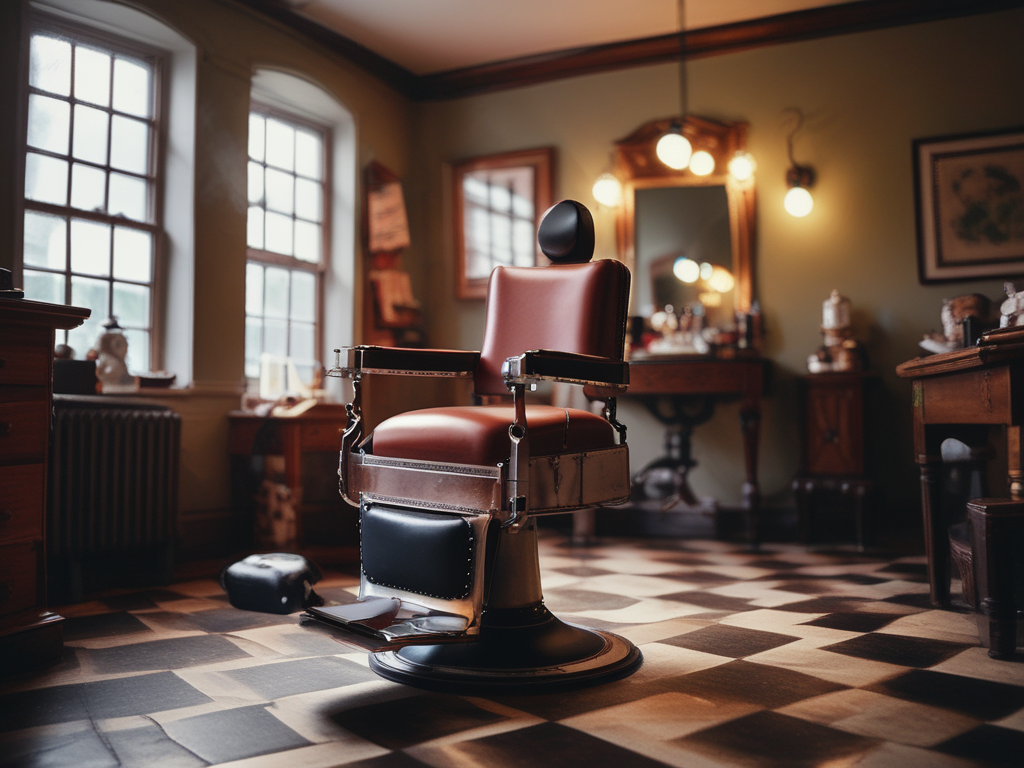
I had my hair cut earlier this week and experienced a first: the barber shaved the outside of my nose.

I am blond and never been hairy; so, I was rather shocked, as the barber told me what he do if he were the England coach, he ran the razor over my nose.

In my Tooting secondary school the boy (?) who developed hair (not on his nose) first was looked upon as a demi-god and immediately voted unofficial form captain.

When you’re twelve you’re desperate for hair to grow everywhere; when you’re sixty-seven you’re wondering where it’s going to sprout from next.

Up until this week my un-Pinocchio-like nose had been untouched by human barbers’ hands, let alone sharp implements.

Clearly the barbers is a place where you experience firsts in your life:  When you don’t have to sit on the wooden booster plank; when you no longer have your mum telling the barber what you want (usually armed with a photo for a years-old magazine).  These are all rites of passage which means you have become a man.

My not reaching manhood was put into sudden realisation the first time I was asked if I wanted anything for the weekend?

“A new boat” I had replied, as that weekend I was going to the ponds on Clapham Common.   Not the entertainment the barber had in mind.  Next!

Putting the ENT in Enterovioform

Medicines in the Fifties and Sixties, when I was a child, were deliberately awful; this was to stop you thinking you were ill. 

We never had Calpol.  We had medicines designed by evil professors – with no taste buds.

Getting a sore throat wasn’t at all advantageous back then as we’d be prescribed the foulest of all tablets: Dequadin.   It’d have been preferable having your tonsils ripped out by some vicious goblin who’d only qualified that week in an ENT ward.

Getting a cold and being forced to hide your head under a towel with a chipped bowl containing Friar’s Balsam taking effect didn’t encourage you buy anything else from the monastery.   I always seemed to get a cold on a Sunday – the treatment would coincide with “Sing something simple” being on the radio.  As if having a cold wasn’t punishment enough – vapours from hell and a radio programme from an even worse place.

The one medical thing I did learn (the hard way): Alka Seltzer – not the ideal product to make lemonade.  All that fizzes is not gold, as the nurse with the stomach pump told me.

Gripe Water’s off, love.

Health, efficiency and safety

My first day of work was 30th September 1974.  I remember it vividly.

Wearing flares on the platform en route to London of Balham station was a mistake,  The wind, generated by the oncoming Tube trains, created a Marilyn Monroe-type effect of nearly lifting me off the platform.   Because of the copious amount of trouser material, if it wasn’t for a particularly attentive guard suggesting I get them away from the doors, I could have been half naked by the time we got to Stockwell.

Safely arriving at Embankment, I had a short walk to my office in Adam Street.  I was to be a clerical assistant with the DHSS.  The boss I had put the SS into DHSS. 

I really wanted, like my dad, to go into advertising but, armed only with a couple of O-levels which enabled me to quote bits of King Lear and name the participants in the Russian Revolution of 1917, a clerical life was to be my world.

I was given a clocking-in card to check I’d done my allotted hours; lengthy school summer holidays were a thing of the past; there was playtime. I couldn’t go home for lunch; everyone was Mr, Mrs or Miss (Ms had yet to be created); they counted the paperclips on your desk.  It was a miserable existence until, six-months later, I started a career in advertising.

The only saving grace, for a 17-year-old boy, was the messengers who worked in the building had a magazine library which made the copies of Health & Efficiency I’d see at the barber’s seem very, very tame.

Pocket billiards

As I no longer own a fob watch, I’ve stopped buying three-piece suits. 

When I first started work in London I’d always buy a suit with a waistcoat; not for any stylish reason, but because it was colder in the ‘70s – the end of the last Ice Age. 

Occasionally they had “take your hamster to work“ day – so the extra pocket was useful – although it would get quite crowded in there if I was playing snooker.

The tiny pockets of the three-piece suit had manifold functions: hamster and chalk aside, you could hook your thumbs in and do impressions of Mussolini.  This was marginally more acceptable in the ‘70s than the ‘40s.  Although one Mike Yarwood never tried. 

You could store your train ticket in one.  These were the days when contactless meant you’d not heard from someone for a while or was a person not stored on the flip-up phone directory which sat on a table in the hall beside the phone. 

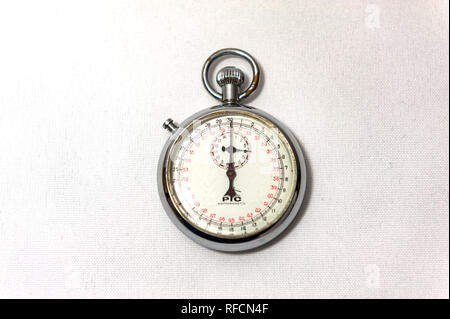
I used to have watch in my waistcoat.  It was second-hand, broken and actually a stop watch.  It was forever stuck on 3.59.  Either the owner had had some terrible accident just before four in the morning (or afternoon) as the watch had stuck at that time, or it belonged to Roger Bannister.  

He never owned a three-piece suit.  He did, however, have a three-piece suite, as he had to put his feet up a lot. 

Thunderbirds are no go

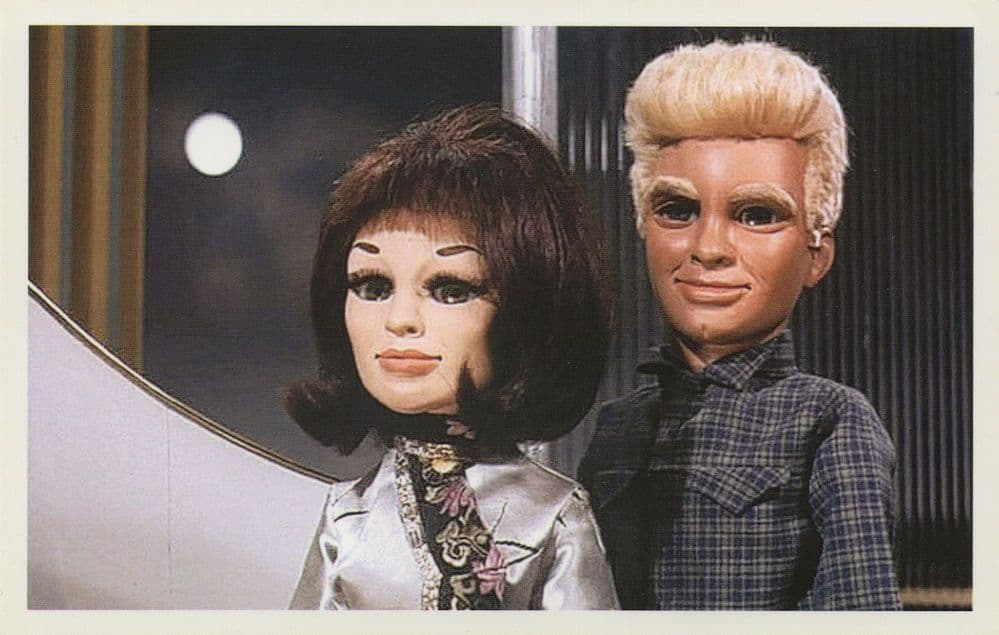
I never ever did collect all the Thunderbirds cards as a kid.  Of the set of fifty, I was missing one card: Thunderbird 3 going through the Roundhouse on Tracy Island.

I would walk the length and breadth of Balham and Tooting High Streets hoping that at least one newsagent would have the packet containing my elusive card.

I had countless multiples of cards depicting the Hood looking evil in a disguise; Tin-Tin looking longingly at Alan Tracy and Parker contemplating, if he ever got sacked by Lady Penelope, where the next bank job might be?   But no action shot of Thunderbird 3.

Some days, I’d consume so much bubble gum, after buying these cards, I felt like I’d caught tetanus.  The newsagent was glad as I was unable to complain.

The alternative was getting a massive sugar rush: buying packets of sweet cigarettes, to get the card inside the packets.  One day, I didn’t get an expected Thunderbirds character, I got Don Bradman (these were the days before sell-by dates).

Had they deliberately rationed them like a 1933 penny; a Queen Victoria Twopenny Blue or a hen’s tooth?  Yes, M’ Lady.

Links fahren

These days HR means you’ve said something you should not have.  In the ‘60s HR meant Holiday Route and it helped guide you (in pre-Sat Nav days) to your holiday destination (along with the rest of the motoring world).

The alternative was to have a set of maps bigger than the interior of the car.

HR meant sand, sea, serial traffic jams.  But, upon seeing those yellow and black signs en route to your holiday, you could smell the brine of the sea – either that or the leftover salmon paste sandwiches you’d eaten before you were the other side of the South Circular.

And all this after being woken up at 3.00 am (“to beat the rush”). 

The slow procession of Cortinas, Populars and Zodiacs made their way for the annual trip to the seaside.  You, dear reader, sat in the back seat with your I-Spy on the Road book; packet of Joyrides and trying hard to master the rules of pub cricket and wondering why we had to, yet again, go somewhere which began with a “B” and not do a road trip through Yugoslavia?

When you arrived you wondered if you’d see the family you met last year from Scarborough?  Of course not, they were halfway to Belgrade!  

Senna podcast

Both my mum and my Auntie Vera (who lived in the same flats as us) would have dressing tables full of bottles and potions – it was like Baron Frankenstein’s laboratory – without the electric wires.

Because of the generation gap of the two women, there was a vast difference to the tables’ contents.

My mother had everything she could collect to enable herself to be Balham’s answer to Claudia Cardinale: mascara; lipstick; Italian phrasebook. 

My aunt needed to peroxide her hair. The lotion stood next to her cup full of senna pods and a bottle of syrup of figs; I was never quite sure exactly where she applied those.  (Knowing what I know now, she clearly wasn’t leaving anything to chance) – she made sure she was regular and that her hair remained “blonde”.

My mother had a tub of vanishing cream.  It didn’t work.  One day, playing football in the lounge (despite there being a sign saying “NO BALL GAMES” – it hung between a couple of prints from Athena), I accidentally broke a vase.   In blind panic I needed to disappear.  I rubbed mum’s vanishing cream all over my face.  I was eventually l found, but haven’t had a single wrinkle since.

Strictly no ties

I’ve been watching some of the 500-odd 15-minute Look at Life films on TV; a snapshot into the ways of life in the UK between 1959-69.  In every film, most people are wearing ties – as did some of the pigs in the quarter of an hour  “On the farm” insight.

When did people stop wearing ties? 

At primary school, we wore ties (on elastic left over from linking my gloves together); at secondary school we wore ties which depicted which house you were in or if you were good at certain sports.

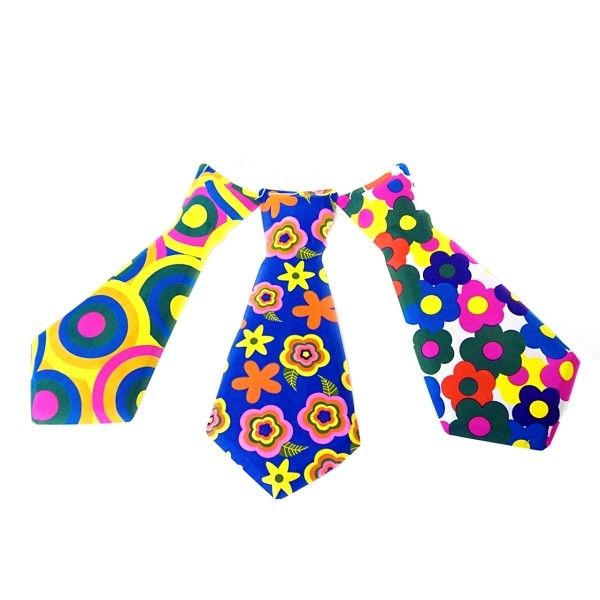
Oddly, during the late ‘60s and early ‘70s, the vogue (mainly with school ties) was to get the knot as big as your head and have nothing left to tie the tie with.  It looked like a giant bat was attacking your neck – you almost expected Christoper Lee or Ingrid Pitt to be helping out in the school tuck shop. 

Pupils secretly thought Roy Castle would visit and thus get them a place in the Guinness Book of Records for having the stupidest knot.

As the seventies progressed, so collars grew extraordinarily big, so your tie’s knot had to be even bigger.

My first work tie was maroon – it looked like I’d stolen it off a bishop. 

There are so many variations of a tie knot.  I always went for a Half Windsor – mainly because it was a move Kendo Nagasaki frequently used on a Saturday afternoon.

The only time I wear a tie these days is when I’m gardening: a knitted green one which wards off slugs.

Remote not working

TV remote controls are more likely to be found down the backs of sofas these days than farthings; dead hamsters or a half-eaten sausage roll.

Back in the ‘60s (and ‘70s with the advent of colour) the TV control wasn’t remote; it was the youngest member of the family. 

If you’d had enough of Coronation Street and fancied Compact, a small person was commanded to get up and physically change the channel.  (There were more small people available as fewer people had functioning chimneys).   If I couldn’t be bothered to get up, we’d watch whatever channel was on until the Epilogue came on.

When BBC2 started, channel changing almost became an aerobic activity as you were on your feet more.

TV repairmen were more in evidence back then too.  

They would arrive, like doctors, with huge bags.  These bags didn’t contain penicillin, leeches or enema kits, they contained valves and wire. 

You learned words like contrast and brightness (the latter not being a word I heard much as a kid). 

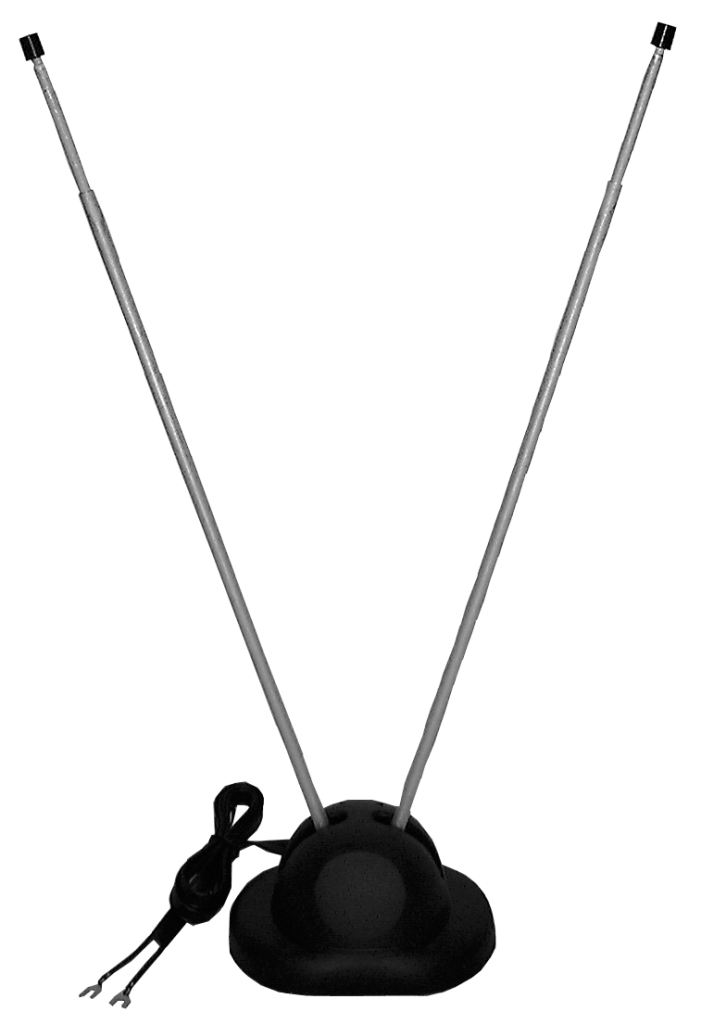
In my Balham flats there were giant aerials on the roofs, but there was still the need for an indoor aerial – unless you wanted to see four sets of Dangerman or see the animals from Tales of the riverbank strangely shivering or doing acrobats.  They were talented, but NOT that talented.

The TV repairman made everything correct again and you were free to watch your programmes.  What he didn’t do was thump the top of the set several times.  And in return, you never said the words Radio Rentals – the TV repairman’s Macbeth or Voldemort.

Can you please hold that aerial still!