Kipling Mint Cake

In an effort to improve me, my dad would take me, on wet Sunday afternoons, to places of interest.

We’d take the coach from Balham High Road and visit south-east England stately homes, castles (usually in ruins) and majestic gardens.

My thoughts, while walking round these places, would be: I’d love to slide down THAT staircase; where would you put the boiling oil to dissuade uninvited guests and what magnificent begonias (I  was a teenage boy)!

And why did most statues only have one arm?  Had they all been in some ancestral scything accident?

For me, the places which housed the Earls of this and the Dukes of that held no appeal.

I wanted to go to the Gift Shop: the treasure at the end of the National Trust-owned rainbow.

I wanted to get a tea towel with Churchill on; a mug decorated with Sir Philip Sidney poems and Kendal Mint Cake sponsored by Rudyard Kipling. 

Oddly, I would also buy coloured slides.  Strange, as I didn’t own a projector.  Perhaps I secretly hoped I’d be invited to someone’s for tea, where the parents had a slide projector and would ask, “does anyone have any slides of Ann Boleyn, some eleventh-century turrets or flowering clematis?”.    Remember, I was entering adolescence 😊

Everyone back on the bus, please.
On Borrowers’ time

During the Sixties, as I’d walk from my Balham flat towards Wandsworth Common to reenact famous Gerd Müller goals, I’d wonder at some of the imaginative creativity in the gardens along the way.

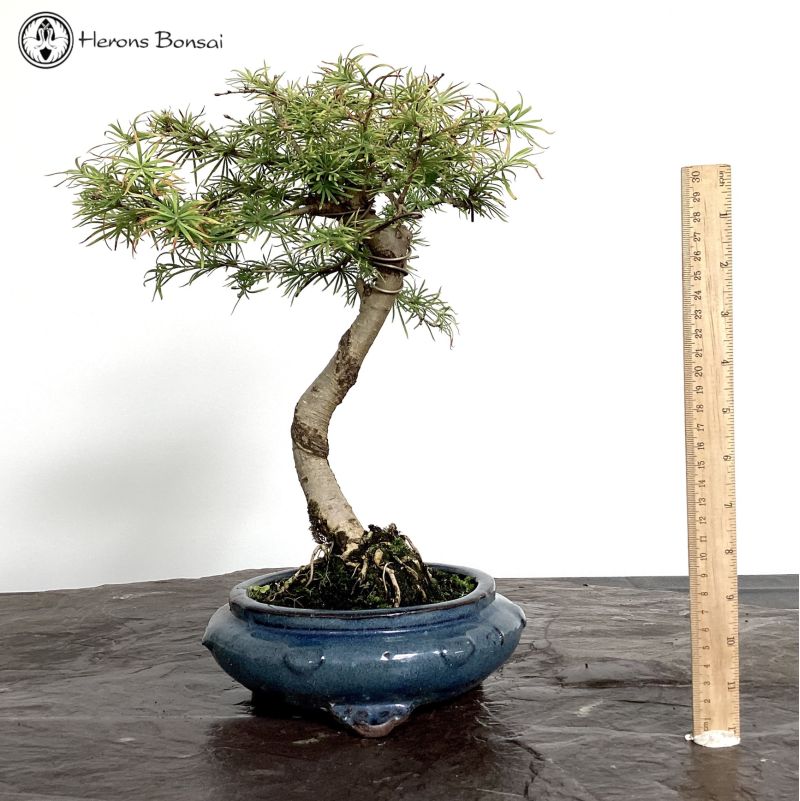
Many people clearly took great pride in sculpting various shapes and sizes on the bushes in their front lawns.  

One day, on the way to the common with my football tucked underneath my arm like Anne Boleyn’s head, I noticed that there was some vigorous pruning activity going on.  However, the tools being used were tiny.  I wasn’t allowed scissors as a kid, but I think I could have got away with playing these, such was their incredibly small size.

At this time we were being read The Borrowers during school.  The town where they lived was never mentioned; now I had living proof.  As I passed this house, they were, like the gardener in Bill and Ben, temporarily absent; but, to me, The Borrowers clearly lived in Balham. 

In addition to the tiny scissors there were tiny pliers; tiny wire-cutters and a tiny penknife.  Obviously, Swiss Army knives didn’t come in XXS.

There were never any competitions held down the street but, for me, the giant cockerel at number sixty-nine always won it.

Three O-level trick

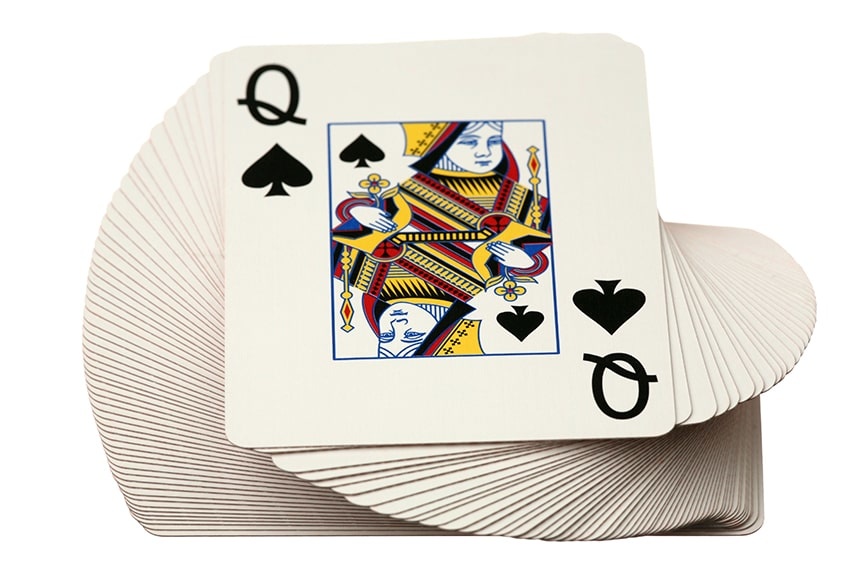
Playing cards have had a continual presence in my life; no more so than when I was growing up in ‘60s London.

As a young child I’d play Snap and Beat your neighbour out of doors.  The latter made me think we had violent neighbours who came round for cups of sugar and needed to be discouraged.

At secondary school Whist was a popular game – especially when it was wet playtime and you’d forgotten your Owzthat kit.

I went to two secondary schools; at the second (marginally posher) they played Bridge:  this is like Whist – only for toffs and numerate toffs at that!  Sadly, for me, the more I played, the less revision I did.  This was reflected in my exam results.   If there’d been a question during any of my O-levels asking “what are trumps?” I’d probably still be at university or running for office in the US.

During the ‘70s, there was a gaming club on Balham High Road.  My friend’s dad ran it. I would visit on Sunday afternoons; we walked through the very quiet snooker hall and upstairs to the gaming rooms – still smelling of Saturday evening’s cigarettes; beer and the Kray brothers.  

Having failed Maths O-level three-times, I’d never knew if my cards were anywhere close to adding up to twenty-one, so, I stuck to Snap during my twenties, rather than playing Pontoon.

Wonder if they ever found the lady?

Cum on feel the himz

During my primary school assemblies in the sixties we would often sing, “Morning has broken”.

In 1971, when I was fourteen, the hymn we would sing, sitting cross-legged in the school hall, came on the radio: sung by Cat Stevens.

In the early seventies I regularly bought Sounds magazine – it had all the words of the current hits in.   I would try and sing these songs, but, having been trained to sing in a church choir, they came out all wrong; I made “Maggie May” sound like it was part of Verdi’s Requiem.  

Each week I would spend most of my pocket money buying singles from the record shops on Balham High Road. 

If Cat Stevens could make a popular hymn famous, imagine what other stars of 1971 might have also done?

We might have had Slade’s version of “All things bright and beautiful” (spelled wrongly, obviously); T Rex singing “Lord of the dance” or have Dawn’s rendition of “We plough the fields and scatter”.

The reverse has rarely happened as you don’t often hear “Chirpy, chirpy, cheep, cheep” being sung in many churches – unless it’s “Bring your pet to church day”.

Ashes to ashes

Because my family were such prodigious smokers, each household contained a wide variety of ashtrays.

My nan had one where, if you pushed the top – like a child’s spinning top, only without the clown painting on the side – the ash would disappear.  When I was young I thought the contents would vanish into a hidden void far beneath Balham High Road.  

One of my dad’s hobbies was stealing ashtrays.  We had one with Bacardi on.  My mother, not wonderfully educated, thought Bacardi was the centre forward for AC Milan.  It was triangular –  like a boomerang; I found out very quickly it wasn’t.

A lot of our flat was sponsored:  our glasses had Esso emblazoned on them – my Ribena often tasted of diesel.   Most of the pens came courtesy of the local Joe Coral and all the scrap paper I was allowed to draw on had the Admiralty (where my mother had worked) logo on.  I became very good at drawing warships.

Our mugs all mysteriously came from various branches of Little Chef.  Quite appropriate as the only thing my mum could cook was an all-day breakfast.  She would do most things for a slice of black pudding.

Ferry, across the Solent

I was nine when I went on my first boat (I don’t count the Water Chute at Battersea Funfair).

The trip was the ferry to the Isle of Wight – I’d been given the I-Spy Book of High Security Prisons beforehand to occupy me.

At Portsmouth, I looked out thinking I could be the next Christoper Columbus – although hopefully travelling directly to Ryde, rather than confusing Jamaica with the coast of India.

I’d seen The Cruel Sea on TV and was fully prepared to encounter U-Boats.  The man helping behind the ferry shop looked a bit like Karl Döntiz, so I felt quite safe.

Because this was my first trip away from mainland England, I was anticipating seeing different flora and fauna on the Island.  Aside from different coloured sand at Alum Bay, not seeing any giant tortoises, Yeti or sabre-toothed tigers (I also had the I-Spy Book of Extinct Animals) was an anti-climax.  Although, the hotel food was prehistoric.

On the return trip I realised a life at sea was probably not for me – unless I was sponsored by Kwells.  So, imagine my horror, when stepping off the ferry back at Portsmouth, there was a press gang there.  Hello, sailor.

Tell the invisible man I can’t see him

There was a joke shop in Tooting which was the ideal destination for anyone who was an aspiring Dennis the Menace or Beryl the Peril.

Because everyone likes to scare their grandparents with a pretend severed finger or plastic tarantula casually placed next to their February 1965 edition of the Reader’s Digest and glass of Complan.  Or create a smell which really couldn’t be blamed on the dog (whether you had a dog or not) and that, after you’d created the accompanying noise with a whoopee cushion placed under an aged relative.

For me, the best thing in the shop was invisible ink.

Watching Dangerman (like Danger Mouse only with less cheese) in the sixties, I wanted to be John Drake – or anyone on TV who was a spy.

I would leave notes, written in invisible ink, for the cleaners of our Balham flats (they were my nemesis and I knew, while on their fag break, they’d automatically reveal my messages).

Having run out of the shop-bought invisible ink, I’d create my own, using lemon juice.  My mother would often wonder why her bottles of Jif ran out so quickly.

I left messages for my mum, but these always backfired because a. her reading skills weren’t very good and b. her lighter was modelled on a make that Red Adair wouldn’t have recommended.  So, rather than knowing I was going to be late for my tea, my mother was busy ringing the Fire Brigade.  To be fair, she did like a man in uniform.

Strike a Bakelite

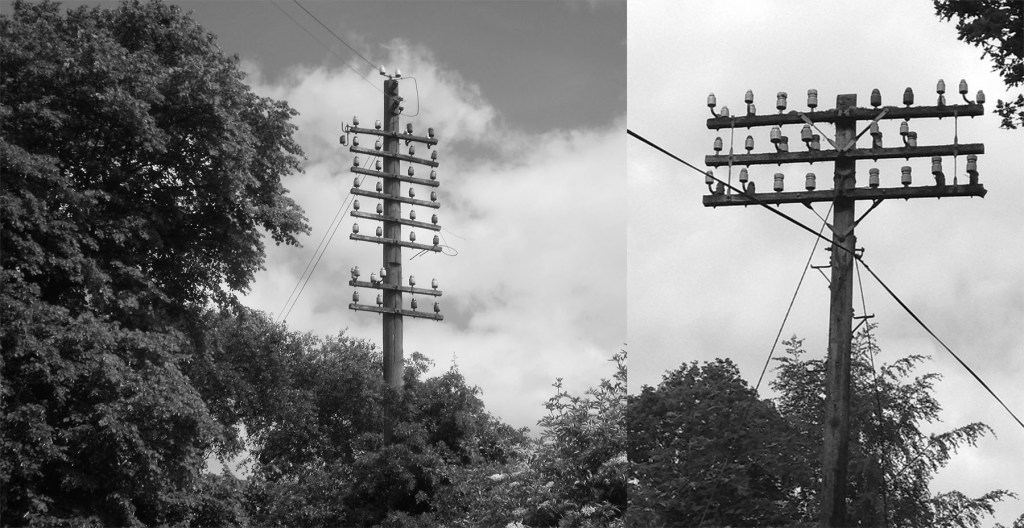
Growing up in Sixties London, I remember having a Bakelite telephone; it would double as a stage weight should the local Am Dram troupe ever need it.

I was nine in 1966 when the change from letters to numbers began.  Overnight, Balham became 673 (Patrick McGoohan would have been horrified).

It was at this point that people thought about getting a novelty phone.  Having a Mickey Mouse phone was very popular.  I desperately wanted one so I didn’t have to say “Balham 0557” and could – quite legitimately – answer, “Hello, Mickey”.

Having had a phone which took up half the sideboard, smaller phones were suddenly the rage. Trimphones, with their distinct ring, was one such model.

I had a friend at school who could mimic the ringing of these phones.  I often went plane spotting with him and he’d cause havoc at Heathrow making his sound and seeing all the people working on the customer services desks answering their phones wondering why no one was at the other end.

Some people would regress and buy phones which existed at the beginning of the century.  The only problem with that was that you felt obliged, when answering the phone, to sound like you’re narrating a Pathé News story.  

Whatever phone you had, it was better than waiting for the party line to finish, pop next door or go to a public phone box.  Never did get those French lessons.

Ushering in the New Year

Going to London cinemas in the ‘60s and ‘70s, I always admired the many talents of the usherettes.

I secretly wanted to be one, but never had the upper-body strength and didn’t suit a hat.

Holding a very steady torch was imperative for the usherettes; strong wrists were needed, as was the ability to wave it like King Arthur’s sword.  The proficiency to say “don’t!” was paramount in the usherettes’ armoury.  Don’t spill ice cream; don’t throw Kia-Ora over the balcony and, if you were sitting near the back, don’t touch that, you don’t know where it’s been.

During the B-film or travelogue, the usherettes would be training their neck muscles to support their intermission wares.  Several hundredweight of tubs can play havoc on your spine.

Having multiplication skills were also key; tubs were very expensive.  You’d needed to be an economist to work out what four raspberry ripple tubs would cost – and have a mortgage adviser on hand.

I cried a lot as a kid in the cinema (the Balham Odeon heard more wailing than the walls in Jerusalem) – I blame Dumbo.  It wasn’t helpful having a giant torch shone at me, as if I were escaping from Colditz, with a strict woman on the other end of it saying “don’t cry, it’s not real” – although I felt it harsh my mother had to treat me like every other audience member.

Hop, skip and a broken ankle

I realised from an early age I’d never make it as a top-class athlete.

This didn’t stop me holding my own Olympics.

I was incapable of walking like a normal person as a kid.  I’d run everywhere – forever trying to improve my leg-break bowling action, while whistling the theme from Patton or The Big Country.  I’m sure Richie Benaud did the same.  Whistling was the sixties equivalent of wearing headphones

For me, the whole of Balham High Road was mentally a cricket and/or football pitch; the pavement, my own Olympic Stadium running track.

If I was walking to school in Tooting or skipping to the Balham ABC for a cup of tea poured from the height of a small diving board, I’d pretend people in front of me were part of my race.  I’d set myself a challenge to overtake a set number of people before I’d get to the Balham Ritz cinema.  My prize being an imaginary Kia Ora.

As I walked, so I perfected my David Coleman impression.  

I’d use the cracks in the pavement for hopping, skipping and jumping as I emulated a triple jumper.   There was never much sand lying around; I invariably ended up in St James’ Hospital with twisted  ankles.  Still, I was a winner, as I never saw another pedestrian trying the same thing.  In my head, they were automatically disqualified. 

And it was the things in my head which fascinated the psychiatrists at St James’.