Odd-shaped balls

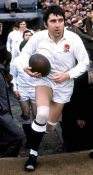
Rugby Union - Five Nations Championship - England v Ireland - Twickenham

I was fine playing football on the cinder pitches of Tooting Bec Common for my school, St Mary’s, Balham. I’d play at left back, not really getting involved as, even though they were an old pair, I wore glasses.

I’d worn glasses since I was five; my dad established I needed them having spent an afternoon of not picking his chinaman round the back of the garages of the Du Cane Court flats where we lived. I think my dad invented the doosra and was Balham’s answer to Muttiah Muralitharan.  I was taken to David Mercer, the optician in Tooting High Street to get fitted with NHS glasses, which had just been paraded at the Paris Fashion Show (not).

When I first went to Bec Grammar School in the Autumn of 1968 I was abruptly introduced to rugby. I’d never seen, let alone try and get one out of a loose ruck, such an odd-shaped ball.

Because of the inherent danger of having a fellow classmate handing me off (this is a rugby phrase and not a euphemism, there were rarely happy endings in my short rugby career) my glasses could easily break, thus rendering my myopia even worse. This was the boy who couldn’t read the large letter at the top of the opticians’ chart with his right eye covered.

Our teacher for rugby (and oddly General Science) was former Bec Head Boy, Bob Hiller. Mr Hiller was, as a former pupil and England’s full back (I thought George Cohen was England’s full back such was my knowledge of rugby), untouchable.

We had two rugby tops: navy blue and white.

Without my glasses I would see three balls coming towards me; it never occurred to me to go for the middle one. Having spent 80 minutes (which seemed like 80 days, there is a ring to a book entitled 80 days round Tooting Broadway) my shirt was still spotlessly white.  I didn’t get involved at all.  I’d stand, freeing  to death, on Fishponds playing fields, like Molesworth’s Fotherington-Thomas; thinking Arcadian thoughts and nothing about rugby.  Mr Hiller, in his infinite wisdom, decided I needed to get dirty and forced me to rub mud over my shirt (he was clearly sponsored secretly, in those days of rugby being an amateur sport, by Daz).

I stupidly told my mum.

My mum, in turn, and even more stupidly, wrote to Mr Hiller. No one has the right to make her little Mickey Mouse dirty for no ostensible reason.  I was a marked man.

Luckily I redeemed myself in the summer as I was, for a ten-year-old quite a good cricketer and had inherited my dad’s finger-spinning ball skills. I was deemed so good I was sent to play for Wandsworth and to report to Al Gover’s cricket school.  However, this was time off school and I never went.  I bunked off. I could have been the next Shane Warne; I was never going to be the next JPR Williams.

From Balham to Bayern

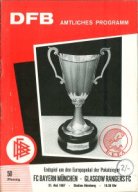
1967_european_cup_winners_cup_final_programme

Football allegiances, I believe, can be categorised into three sources: supporting your local team (very laudable); glory seeking (glory seeking) and parental indoctrination (who pays for your food?).

Balham United, of which the caretaker at my school, St Mary’s on Balham High Road, kept goal, was my local team growing up. They never featured on the ladder you could get at the start of the season in Shoot so I followed my dad’s team.  Dad went to Stamford Bridge for every home game and was a massive Chelsea fan (or Speedway as they had that when he was going, let’s stick to Chelsea or this article will become irrelevant very quickly).

Throughout the 1966/67 season my dad would take me to the Bridge. This was a time when football violence was becoming endemic and I was conscious of the intimidating atmosphere.  Dad and I would walk from our flat in Du Cane Court to Tooting Bec Station and get the 49 bus towards the home of Chelsea FC.

My dad was so keen to make me a Chelsea fan he took me to ex-Chelsea player Frank Blunstone’s shop on Lavender Hill and got me a Chelsea kit with a number 9 (Peter Osgood) on the back. There was no sponsorship, no team name.  The Chelsea logo on the front and the number 9 on the back.

On Saturday, May 20th 1967, Chelsea lost 1-2 to Spurs in the FA Cup Final (which this year, as I write this, will possibly be contended between non-league sides, Sutton and Lincoln – modern day Balham United equivalents).  I had decided, from my armchair, that this team was rubbish and the quest for a new team began.   I was, I hasten to add, more interested in cricket, but peer group pressure insists you follow a football team; my thought now was which one?

I was (I believe I still am) an only child. A consequence of this was that I was sent to bed, most days, exceptionally early.  In the summer the sun would be shining, but my mum’s little Mickey Mouse, was forced to have his beauty sleep.

Fortuitously, because of my dad’s passion for football, screamingly early bedtime was delayed on the school night of 31st May 1967, eleven days after I’d spurned the Blues like a rabid dog.

There wasn’t the proliferation of football on the TV in 1967 – if you’ve got a big enough satellite today you could watch football 24-hours (especially if you like hard-fought cup games in Timor Leste); this game was the first, live televised game after the English FA cup final.

The game was between Rangers (whom I assumed were from Canada) and Bayern Munich (could have been from anywhere). The event was the European Cup Winner’s Cup Final.  Dad explained it had been the previous season’s equivalent of the FA Cup winners in various European countries in a knock-out competition.  The cup doesn’t exist anymore and has gone the way of other pan-European tournaments like the Inter-Toto cup (Toto split from Inter and went on to record “Africa”).  Chelsea weren’t going to compete in that next season, obviously, which highlighted my need to change footballing support.

The game started at 7.30 PM (perilously near bedtime). I didn’t care that I was unaware of the competition, both teams meant nothing to me – I was in my jim-jams, but allowed to watch TV.  It was on this evening that I had a Damascene moment and realised there was a God – and he was possibly German.  The game was 0-0 after 90-minutes.  Dad realised the importance of the game (I couldn’t give a monkey’s – I was staying up late).  Extra time started (as far as I was concerned it was probably nearly time to get up it was so late) and after 109-minutes Bayern Munich scored.  The score remained at 1-0. Bayern had won the mouthful tournament the European Cup Winner’s Cup.  A team of winners.  I went to bed after ten o’clock, with, I swear, it was just getting light.

So, glory seeking it would be and the team I would support would be the team not from Canada, Bayern Munich.

During the following few seasons I wondered why Bayern Munich were never on March of the Day or The Big Match.  Wolverhampton Wanderers seemed to be on it a lot but they’d not won anything in Europe.  Derek Dougan wasn’t even singing the song for the Northern Ireland Eurovision Song Contest entry.

There was no such thing as the internet those days (which may have affected my eyesight even more if there had have been) so no way of keeping up with my new team’s news. The absence from football programmes in the UK was a conundrum for me.

It wasn’t until we started learning O-level Geography at Bec Grammar and focussing on North West Europe that I realised exactly why Bayern Munich had never featured having David Coleman commentating on a cold Tuesday evening at Stoke. The glory seeking also kicked in during the 1970 World Cup finals in Mexico where six of the eleven West Germany players played for Bayern.

50 years on, Balham United possibly don’t even exist, Tooting & Mitcham have never threatened to win the Champions League, so continuation of following Bayern Munich has carried on. This is the sixteenth season I’ve had a season ticket and can say “where is the nearest chemist?” in German as well as my name, age and inside leg measurement.   I was there on Wednesday against the Arsenal and these days Thomas Müller has replaced his namesake Gerd as my hero. Auf geht’s Bayern (I think my clutch has gone).   If Bobby Tambling had scored a hat-trick on May 20th 1967, my Saturday morning travels would be slightly easier.  He didn’t, so 1,100-mile round journey every other weekend is now routine.
A lighthouse moment

north_forland_old1

I wasn’t terribly lucky with adventure-filled trips away with school or para-military organisation (my Cub group did go camping, but only in the field behind the church of St Mary’s on Balham High Road – about 100 yards away from where we’d weekly shout “dyb, dyb, dyb”. The field was still considered dangerous and we were inoculated against Dengue fever four weeks’ before.  There was always rumours Anthrax ad been placed there during the war).

I remember, when they were at school, paying for my kids to go to America, Israel, Berlin; I spent a week on school journey in 1968, in Cliftonville.

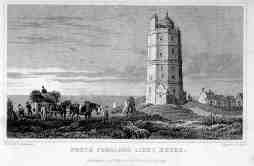
Cliftonville is a sub-district of Margate, on the Kent coast. In 1968 it was twinned with Roswell.  I remember two trips away for the minus-two-star hotel where we were staying: one was to the North Foreland Lighthouse.  I decided there and then that a career as a lighthouse keeper was unlikely.  Ironically, after failing my O-levels for the second successive time and my dad taking me to an industrial psychologist, I was told that perhaps a career in lighthouse-keeping might be on the cards as I knew what a lightbulb was.  And knew that a very big one was needed to make the lighthouse function.  He did asked me how many people does it take to change a lighthouse lightbulb, when I answered “fish” it was then that he suggested a career in advertising.

Looking back, I’d have enjoyed working alongside the Sirens who lure sailors onto the rocks on the East Kent coast. Although at just over eleven years of age the only siren I knew was the noise coming from one as I tried to sleep most evenings in my ground floor Du Cane Court flat, as the police arrived to attend to happenings in the dance club on Balham High Road opposite.

The second trip was to a farm. 100 yards away from the farm told me I’d not be making a point of tuning in each morning to listen to the programming on Radio 4.  The smell was like some form of olfactory torture.  There also, even at 11, seemed something really quite wrong with what was happening with cows’ udders on the farm.  There smell still lingers: like Virol and calamine lotion.

Secondary school trips at Bec Grammar were slightly more exotic. We went abroad twice.  This was pre-tunnel and we travelled by boat to Boulogne one year (and despite our behaviour on French soil) and Dunkirk, the following year.

Everyone wanted to buy flick-knives (those days they were more in evidence than croissants) and cigarette lighters, whose flames were based on those emitting from the oil rigs in the North Sea.

We were all packed off by our various mothers with enough supplies assuming we’d either we’d never return from this foreign field or they’d hope we’d introduce the French to the joys of family-sized packets of Custard Creams.

The French were never given this opportunity of sampling Custard Creams as all were eaten (as if hovered over by a judge with a stop-watch from the Guinness Book of Records); they were all consumed before the journey back. This is why, on the second journey, we were packed off with Joy Rides and Kwells.

Vive la France – where is the nearest chemist?

Bob-a-Job weak

bob-a-job-week

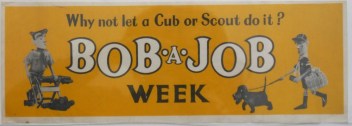
Even though the British Government passed the Abolition Act in 1833, one hundred and forty years on, slave labour was still very much in evidence in the form of small boys in shorts going from house to house offering their services (experienced or otherwise) for the price of a shilling (5p).

This was Bob-a-Job week, encouraging Cubs and Scouts (these were the days before Beavers – a name clearly resulting in the research group determining the name being made up entirely of adolescent males).

It would seem, after exhaustive research amongst my gym buddies, that I may have got off lightly with the tasks they had to do for a lowly shilling. I didn’t have to walk dogs (or lose them) nor peel the entire crop of Ireland’s potatoes in the early 60s. My task, given I lived in a block of over 600 flats in Balham, where animal ownership was not encouraged and there had been a potato blight whilst I was studying for my Signaller’s Badge, was relatively light.  I polished letterboxes; I didn’t lose a single golden retriever, nor did I prepare a single chip.

After these Herculean tasks were accomplished, the donor would hand over the shilling and sign the card you carried. The money earned went towards the needs of the Scout pack; I always dreamed of getting a bigger woggle, but surgery wasn’t as advanced as it is now.

The letterboxes in Du Cane Court, where I lived, were quite small (although luckily bigger than a Post Card) and therefore didn’t have much brass round them to clean. My nan and her sister lived in the flats too and were sufficiently menacing to ensure I had a large database upon which to work.  Other tenants would rather part with a shilling than have my nan eff and blind at them in the communal dairy or have my Auntie Vera threaten them with a lighted Embassy.

I still have allergic reaction to Duraglit and am currently suing the Scout Association.

I guess Bob-a-Job was a pre-cursor to Just Giving?

It was ionic that I’d have to charge a shilling for doing things round the flats whereas my mum did most activities for nothing. There was a woman who knew her woggles.

When I see an elephant fly

balham-odeaon

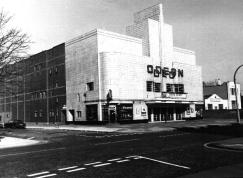
It is Majestic Wine now, but years ago, in its place on Balham High Road, sat the Balham Odeon.

If you went there now you’d be more likely to get Burgundy rather than Butterkist and Chianti rather than Kia-Ora.

I was never a regular there for Saturday Morning Pictures. I went twice and both times they were showing “Emil and the Detectives” so I assumed, having learned the plot and most of the dialogue, it was pointless attending much after that as this was clearly the only film they showed.  My mum was quite relieved as my clothes would end up being soaked courtesy of someone above me accidentally dropping their Jubblies on me.

In 1970 my dad took me to watch George C Scott as the eponymous hero in the Oscar award-winning film “Patton: Lust for glory”. The film had a profound effect on me as, if ever, as a teenager, I even got close to speaking to a girl, I’d be so pleased, I’d run off down Balham High Road, bowling imaginary leg-breaks and whistling the main theme.

In 1963 my mum took me to the Odeon to watch “The Scarecrow of Romney Marsh”. The film, based on the books published in 1915 by Russell Thorndike (Sybil’s brother), tell of a vicar by day and smuggler in 18th Century Kent coast by night.   In the 1963 film version Patrick McGoohan (“Dangerman” and “The Prisoner”) stars as the innocent vicar who, as evening comes and there is rum to be collected, dons a scarecrow mask.  If it had been used in the “Wizard of Oz” they’d have had to have made it X-rated.  It was scary and, to a particularly sensitive six-year-old, too much and, before I could break the film projector with my screaming, my mum took me out of the cinema.

The next time I went I didn’t last the 100% of the film. Dumbo, which my mother thought less violent, was the next thing I saw.  Well, saw up until Dumbo’s mum is trapped in the fire.  Again, before I could flood the Odeon with my tears, I was hastily removed.

I work in a business where I have to negotiate. People who know me and know of the Dumbo story realise that, if the negotiation isn’t going their way, all they have to do is say, “Run, Bambi, run.”

I assume Jubblies aren’t sixpence anymore?

One man and his 140-year-old dog

dcc-garage

Sport, living in Du Cane Court, was always restricting. With never more than ten children living in the flats, team sports were forever challenging – even if we included our imaginary friends (of which, being an only child, I had an entire family) we’d never make up a full XI.

Even with both Tooting Bec and Wandsworth commons nearby we still chose to play most of our sport around the garages which were round the back of the flats. In those days there were very few cars, a consequence was that our “playing field” was quite safe. The only traffic tended to be pedestrian in the form of the head porter, Mr Hurst, and his dog, Blackie (this was the sixties).

There were several “NO BALL GAMES ALLOWED” signs up and around the garages; Mr Hurst’s job was to manage this. Sadly, Mr Hurst, an ex-prison warder, had been bitten by a prisoner in HMP Wandsworth and consequently walked slowly and with a limp.  As did Blackie, who was the wrong side of 20 – and not in doggy years.  Despite being the human equivalent of 140, the dog was quicker than the man and would waddle into view first.  There were two ways into the garages and, as the dog entered at one end, we would gather up our sporting equipment and leg it the other way.  We were never caught and mercifully so as child-biting was still allowed in the mid-sixties.

When we did get to play and were Labrador-free, we would invent games for two or three people. The only problem was the low level of the garages.  If someone decided they were going to Wes Hall and get a ball to rear up, there was no option other than tipping it onto the rooves of the garages.  Subsequently, we became very adept at climbing walls onto the garages to retrieve our balls.  Word had it that Sherpa Tensing lived in the flats and mastered his climbing skills on the rooves of the garages in Du Cane Court.  We once found a set of clamps and, putting two and two together, made Everest.

We had to decide on a set of rules when the cars were about and it was possibly one summer to be given out caught one-handed off a Ford Cortina.

Half a sixpence

half-a-crown

On Monday, 14th February 1971, when I was nearly 14, the UK currency system changed from the Roman Denarius system over to decimal (named after the Roman god of decorations – which is why Christmas is in December).  On the same day Belgian farmers illegally entered the EEC building in Brussels with three cows.  (Some of those cows went on to form UKIP).

It was on this day that I would have preferred to have been attacked by a mad, Flemish-speaking cow, as my mother had ordered me to teach her this new fangled method of money.

I have mentioned before in this vehicle that my mother’s education was limited given her own mother keeping her away from school for the duration of the war.  A consequence of which, although my mother could read, she was unable to write and certainly couldn’t add up (she thought that calculus was a former Roman emperor, multiplication was a song by Little Eva and division was a town in Wiltshire).  I had to teach this woman that, as from today, 240 was now 100.  I had more chance of successfully teaching my pet goldfish long division without using the aid of a sunken ship and a diver.

It was one of the most painful evenings of my life.  Given that I would go on to fail Maths O-level three times (I think it was three) it was like the blind leading the blind.  If we’d have involved my maternal great grandmother it would have been the blind leading the blind, as she was blind.

Sadly, she’d “gone to meet the angels” when I was six.  I always assumed the Angels were a family she knew who owned an Old Peoples Home for blind people and my great grandmother had gone to stay there.

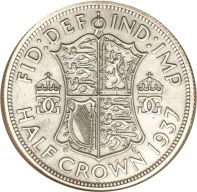
I was never going to get my mother to get her head round the fact that half-a-crown was going to be twelve-and-a-half new pence.

“Halfpence,” she questioned, “will they be cutting the coins in two?”  So, adding up abilities poor, but she could do simple division.

The only good thing, in mum’s eyes, was that £500 was still a monkey.

However, this potential problem was averted as my mother, not yet forty and certainly not looking it, was tall, stunningly good looking with blonde hair and blue eyes.  She might not have been able to add up, but she managed to get a lot of things from various shopkeepers the length of Balham High Road for free.  Well, when I say free…

She couldn’t spell, but, from the carpet seller on Balham High Road, she would never go short of a new shag-pile carpet.  Quite apposite, really!.


Thunder snow

For nearly sixty years I’ve listened intently to the weather forecast and have built up a vocabulary second only to my mother’s prolific and prodigious swearing repertoire.  Today I have leaned a new one: Thunder snow.  Ok, two words.  This what arrived in London today.  Should I get Virgil Tracy to get his snow-shovelling mole out of a Thunderbird 2 pod and save us all?   I’d suggest a Thundercat saving us too, but all their names were unimaginative, especially Sabre-Tooth Tiger-o.  Although I did like Elaine Paige in the stage show.

It will be talked of as an Arctic Blast.  “Bet you look good on the dance floor” being my favourite hit of theirs.

Aside from pigeons, my other fear is thunder.  I rarely pull rank at work, but my one instance is that, if it is thundering, someone stays in the office.  If there is no one there I have an inanimate green frog who protects me.

My holiday hell would be chasing thunder storms across the US.  If I inadvertently went on such a holiday I’d probably choose to lie (with aforementioned green frog) in the glove compartment.  They tend to be quite large in American cars.

The British are ill-equipped for any Arctic blast: they only have one shovel in Yorkshire, the only snow plough in the Home Counties has been made my Matchbox and Southern Rail are saying their guards shouldn’t be allowed to deal with snow from a foreign land.

People on the continent will be laughing at us.  People who voted Leave now realise the error of their ways.  Tomorrow Liam Dutton will be King and Susanne Charlton his Queen.

Don’t drink the water

The post-Christmas season historically offer us a plethora of travel ads.  It’s cold and wet in the UK, so travel advertisers are encouraging you to seek warmer climes.

Having been on the receiving end of much moaning from my mother, my father succumbed and booked us on our first foreign trip: we were heading for Majorca.  It was the summer of 1968.  If Frankie Valli had had number dyslexia he’d have sung a song about it.

My mother had previously been to Bognor, Brighton and Bournemouth.  Because she’d had little education through not going to school during the Blitz, she’d only really mastered the letter “B”, so her vacation destinations were alphabetically limited.

We set off from Luton Airport to Palma.  It was only when we stepped onto the tarmac that we realised my mother had a fear of flying.

Earlier we’d been delayed several hours; we’d all been given vouchers to the value of 2/6 (12 and a half pence in today’s post-decimalisation days).  Mother took mine and got herself more alcohol.  We had to walk from the departure lounge (less lounge, more outside toilet) across the tarmac onto a plane which wouldn’t have looked out of place during the Berlin Airlift.

Whilst my father was carrying copious bags of Duty Free, my task was to get my mother onto the plane.  In 1968, when I was 11, I was very slight and so weak I couldn’t even pick up a discus during school athletics, let alone throw it the required distance to avoid getting detention.  So getting a five-foot seven, thirty-five- year-old adult on the plane was an incredible feat.  Not blessed with the persuasive powers of the Brothers Saatchi I simply dragged her like a caveman brining a sabre-tooth tiger back for tea.

Several weeks before the trip we were encouraged, lest you caught Spanish Tummy, to take tablets with the snappy name of Entero-Viaform.  The packet did what it said on the tin as there was a cartoon man gripping his stomach featured on the packet.

Even with the preventable medicine, my mother still got ill. This had followed on very quickly with her contracting cow pox, having one too many of her “heads” and now she had Balearic Belly.  My father vowed never to take her abroad again.  He didn’t.  It was back to Bognor next summer, there was less chance of getting Bognor Belly there.

Cough up, it might be a gold watch

The Queen has made her first appearance since going down with some lurgy, which is possibly this bronchial virus which has been going round.  Having missed two major church services I assume she’ll excommunicate herself?

It seems that many people have been affected by this illness which hangs about for three-weeks and makes you sound like Jane Austen and Frederic Chopin before being carted off to a sanatorium in Eastbourne; I’ve already started saving up for a blanket and bath-chair.  I knew those Green-Shield stamp books would come in handy.

In the mid-sixties peoples’ minds were temporarily taken off the ever-decreasing lengths of skirts as a possible smallpox scare hit our island.  Everyone was encouraged to get inoculated against this killer disease; I remember queuing up outside my doctors on Balham High Road to get mine.  Similar to going to foreign climes and the need to have a little bit of typhoid or West Nile Fever injected into you (you have to feel for the people of the West Nile having such a vicious disease named after their home town – it’d never happen in West Hampstead) the vaccine for smallpox is the bovine disease, cow pox.  When this first began in 1796 satirical magazines showed cartoons of patients growing little cows from their limbs.

My mum got cow pox.  It meant two things: if she got smallpox she’d be stuffed and secondly, she couldn’t be inoculated against it.   Whilst she was ill she was forced to wear a bell, get milked twice away and only answered to the name of Daisy. It was rather typical of my mum – she and ailments went together like Pete ‘n’ Dud, Ron and Reg, Julian and Sandy.  She rarely took me to school as she’d often have “one of her heads” – as a youngster I wonder quite how many heads she possessed?  Could she remove them like Frankenstein’s monster?  Was the The Exorcist based on my mum and her head-swapping ability?

Sadly, my mother could also pick up diseases by hearing about them on the TV.  There could be a documentary about Dengue Fever on the telly one night, by early morning my mother thought she had the early symptoms. Always embarrassing being dropped at the school gates when one of your parents is ringing a bell screaming ‘unclean’.