Culture after-school club

I was eleven, and starting secondary school in 1968, when I discovered that culture was something other than what my Nan had in her larder (she didn’t have a fridge in her Balham flat and nearly beat Alexander Fleming into discovering penicillin on an old slice of Mother’s Pride).

My mother did have books; invariably by Jean Plaidy.  For years, when my mother would talk about her books, I would half-listen and think Geoffrey Plantagenet was her driving instructor.

Having learned to play the violin at school (it got me off maths – to this day I’m not very numerate, but can play Baa, Baa, Black Sheep on any four-stringed instrument) I was invited to join the school orchestra.

We were to play the overture to Wagner’s Mastersingers of Nuremberg.  I’d enjoyed a few episodes of Hart to Hart, but didn’t know he’d written operas. 

Because I could sing, I was also in the school choir.  At a school concert once we had to sing Vaughan Williams’ Orpheus with his lute.  As we’d never learned about medieval instruments, as near-teenagers, we thought this was a euphemism.  I’m surprised my mother allowed me to sing it as I was never allowed to walk the streets with her with my hands in my pockets.

I don’t know much about lutes, but I know what I like.

Cum on feel the himz

During my primary school assemblies in the sixties we would often sing, “Morning has broken”.

In 1971, when I was fourteen, the hymn we would sing, sitting cross-legged in the school hall, came on the radio: sung by Cat Stevens.

In the early seventies I regularly bought Sounds magazine – it had all the words of the current hits in.   I would try and sing these songs, but, having been trained to sing in a church choir, they came out all wrong; I made “Maggie May” sound like it was part of Verdi’s Requiem.  

Each week I would spend most of my pocket money buying singles from the record shops on Balham High Road. 

If Cat Stevens could make a popular hymn famous, imagine what other stars of 1971 might have also done?

We might have had Slade’s version of “All things bright and beautiful” (spelled wrongly, obviously); T Rex singing “Lord of the dance” or have Dawn’s rendition of “We plough the fields and scatter”.

The reverse has rarely happened as you don’t often hear “Chirpy, chirpy, cheep, cheep” being sung in many churches – unless it’s “Bring your pet to church day”.

One hundred lines of solitude

I was a goody-goody at school. 

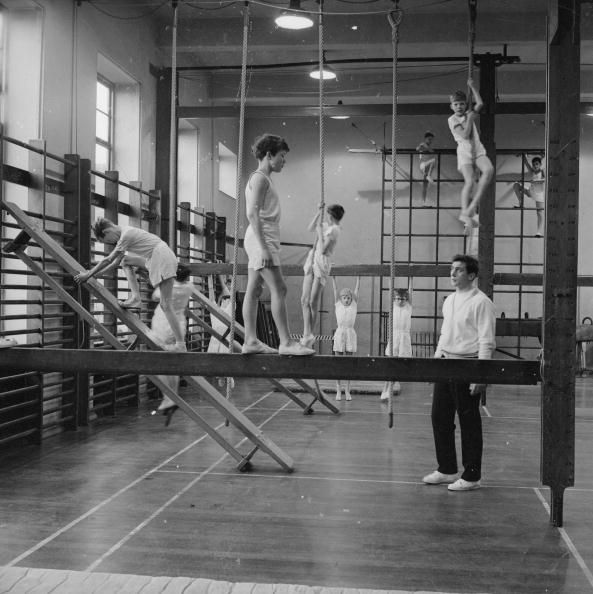
I only once received a detention and that was for getting 0% in a PE exam.   I failed the practical by being unable to climb a rope and failed the theory by being unable to spell “apparatus” (which, in Latin, means: “the Romans did somersaults”).

What I did have was a lot of red ink over my books.  If I knew I was going to be this unsuccessful academically, I’d have bought shares in Quink when I started secondary school.

If I had a £1 for as many times as I had “SEE ME” emblazoned in red ink on my workbooks, I’d be (like Rodney) a millionaire.

Most aspects of my class and homework were marked out of ten.  For most of my secondary education I never knew there were numbers higher than five.  Or that there were colours other than red.

I’d dread getting my books back.  I’d open them up to the corrected work only to assume the teacher had been the victim of some savage attack, such was the amount of red on the page. 

This could well have been the case, as our PE teacher modelled his teaching techniques on Jack the Ripper.

Mini bannister

Until my auntie Vera took me on a trolley bus from Wimbledon to Belmont (which seemed so far away from Balham, I could have been on Neptune), my second favourite mode of transport was bannisters.  (My first was the train, as I enjoyed climbing into the rope luggage rack.  I think I had been a monkey in a previous life).

In my Balham flats the cleaning ladies had done such a fine job with their tins of Pledge on the bannisters that, going down them, was like the bobsleigh at the winter Olympics.

Perhaps it’s a boy thing, but going down the flight of stairs from my fourth-floor flat, I’d slide down the set of bannisters rather than testing my multiplication skills by taking eight or nine steps at a time or take the lift.  

Oddly, I never did this on the stairs at Balham Tube station.  I think the metal studs fixed regularly on my potential downward “course” were off-putting.  “Vasectomy” was one of the first Latin words I learned.

A consequence of this constant sliding meant one side of my trousers became quite worn.  When questioned by my mother about this one-sided wear and tear, I said that one of my thighs was larger than the other and therefore rubbed.  Explaining why I’d drawn Olympic rings on her best tea tray was less convincing.  You win some, you luge some 😊

Chalky Purple

Is chalk used in schools anymore?

When I went to my south London schools, it was always very evident.

I used it on my first day – as a drawing implement where I depicted my mum looking like a giant potato with no arms – and on one of my last days, when I had a piece imbedded into my skull, thanks to a particularly irate music teacher. 

Having had a mis-spent youth, my O-level results were reflected by the amount of chalk inside my waistcoat and behind my ears. 

During my O-level year there was so much chalk on my hands, anyone would have thought I’d taken up weightlifting. 

Chalk was much in use in my school playground.  You knew who was best at maths as the hopscotch grids went in the correct numerical order.

One of our class’s dads was a toy salesman; with a stolen set of Crayola multi-coloured chalk, we had yellow penalty areas, turquoise lines outlining the Double Dutch rope-swinging area and purple stumps.

We were the ‘60s equivalent of Kerry Packer!

Playtime conkers all

As you get older, so you complain more about the vagaries of the weather. 

During my south-west London school time, during the late ‘60s and early ‘70s, I can never ever remember there being “wet play”. 

We had two 15-minute breaks. (I still think of a quarter of an hour as one-playtime).

As boys, we would invariably play football.  However, there were two dangers in our playground.

The only boy who didn’t play football, ran round the playground pretending to be a Ford Zodiac.  There was the danger that he’d take out our team right-back when mis-timing his turn round the school water fountain.  And a Ford Zodiac, for those who can remember, was a very big car.

The other ever-present danger was the girl who thought she was a golden retriever.  Not only could her lead get caught up with your legs as you sped down the wing towards the opponent’s goal, but there was the constant danger of catching rabies if she bit you (she had a note from her mum saying she didn’t need a muzzle).

If it had ever rained, we’d have been in our class struggling against pretend carbon monoxide fumes and the smell of wet dog.  Still, it was preferable to Music and Movement.

Deskbound

There were many changes for me going from primary to secondary school.  Aside from getting used to my long trousers chafing, we had actual desks.

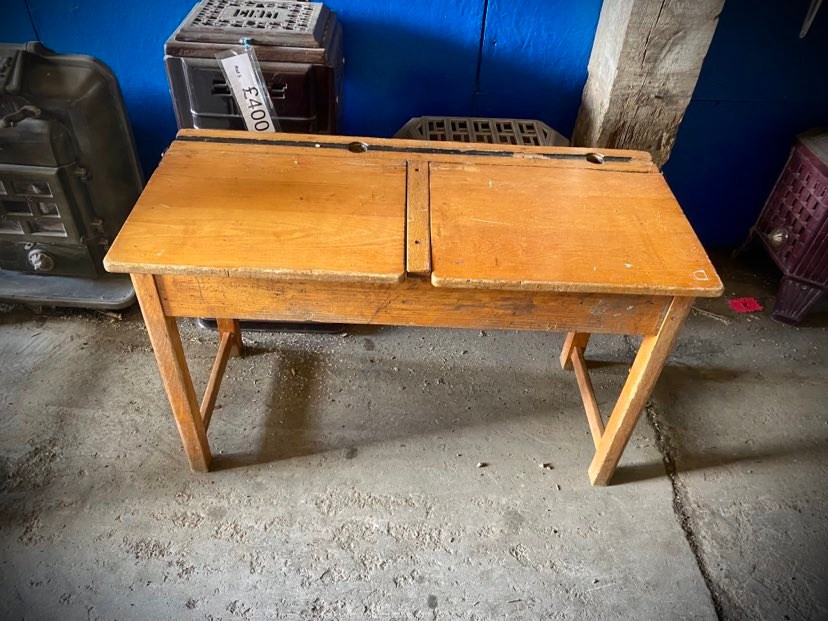
At primary school we had tables.  Our new school, deep in darkest Tooting, had wooden desks.

There was much carving on my desk.  The desk was so old, I almost expected to see drawings of buffalo or mammoths carved into the top.

The desk had a lid on it.  I gingerly lifted it up, checking that no one had written “Pandora was here” on it.

Assuming that all the world’s ills were not in the desk, ready to fly out, I continued to open the lid; the contents were disappointing.  There were no Post-It notes on the inside with any instructions for finding secret tunnels; invitations for illicit liaisons (no bad thing given I was only eleven and it was an all-boys’ school) or the answers to that week’s French vocabulary test. 

There was, however, a fossilised iced-bun.  At first I thought this had been left by some Neanderthal who’d lived in Tooting when it was all lavender fields and/or marshy swamps?  It wasn’t until the first break, when iced-buns were sold, that I realised I hadn’t uncovered a neolithic food storage site.

I did discover, mainly during supremely dull French lessons, that the desk was very comfortable and easy to sleep on. One of the many reasons I failed French O-level or never became a palaeontologist.

Shouting down

This week I was travelling to London, changing trains at Clapham Junction. 

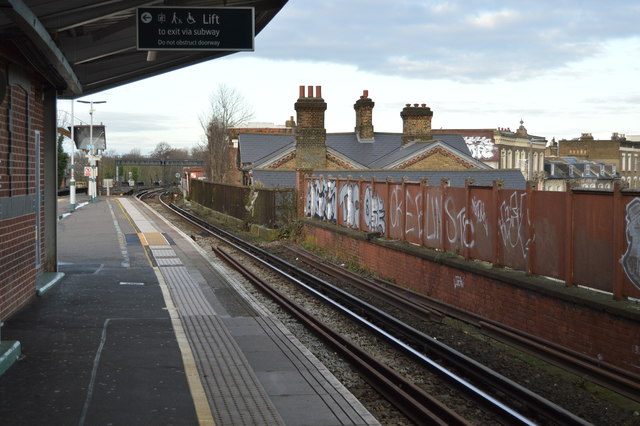
This is the Mecca for trainspotters: Clapham Junction is the busiest station in the UK.  It’s not actually in Clapham, which means, if you are a trainspotter, you will need to be good at orienteering too.

In the early ‘70s this station was one end of my daily commute.

I would walk to the station from my school every evening with several friends.  One friend lived in Wimbledon.   His platform was 100-yards away from mine; mine headed heading towards the Gateway to the South.  When you’re fifteen, you couldn’t give a monkey’s about other people around you; my friend and I would continue our conversation across several platforms – like human loud-hailers.

Back then, there were no electronic indicator boards – for any form of transport.  These days, you know exactly when the next bus or train will arrive.  In the ‘70s, you could be at a bus-stop and sometimes feel you were on the set of Waiting for Godot.  

Back on the platform, I’d look hopefully at the station staff as they dipped into their four-foot high box which housed the train destination boards.  Until the one mentioning “Carshalton” was withdrawn and inserted into its rightful place, I continued shouting across many platforms, asking: “how do you draw an ox-bow lake?” and “just how many bloody Pitts were there?”.

Gute Reise, as my friend’s Austrian mum would have said.

Outnumbered

“It’s five to five; it’s Crackerjack”.

Any of us who have gone to work, and learned very quickly not to get on the empty smoking carriage of the Tube train as it pulled into Balham Station, would have been reliant on specific times and timings; we’d have been aware that nine o’clock was very important, but not half as important as five o’clock.

For me, at my secondary school, ten past four was the best time; the time the final bell rang, announcing the end of the school day. 

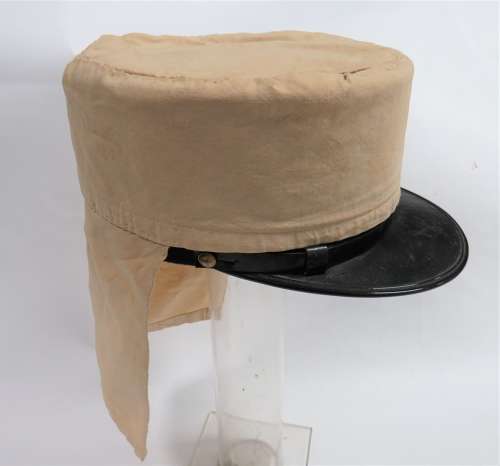
You had five minutes before the school the other side of our rugby pitch and their electrified fence, had their own bell rang.  Five minutes to leg it to the sanctuary of the bus stop, before your cap was either nicked, knocked off or made into a gag or, from some of the more creative boys, a doily.

Nearly fifty-years on since I left school for the last time, 4.10 pm still has a magic ring about it.  A sense of relief.  A time when I decided, shall I play football, perfect my leg-break or conjugate a few Latin verbs?  

TV, aside from just Crackerjack, taught you the time and numbers.  Six-Five Special taught you how to count backwards, as did 3,2,1; Beverly Hills 90210 introduced very big numbers; Blake’s 7 catered to the less numerate; Patrick McGoohan was determined not to help at all.

Although I can’t remember when News At Ten was on.

Legion’s disease

I was ten when my parents left me in a hall I’d never visited before; with kids I’d never met; playing games of which I’d never heard.

Was this some sort of punishment?  Had I been awful in a previous life?  Was this Karma for not tidying my room once too often?

I stood (and wished it was a burning deck, such was my desire to be somewhere else) by the entrance of this hall near Tooting Broadway. 

“Ok, Michael, have fun, we’ll see you in a few hours”.  

Was this what it was like when you joined the Foreign Legion?  Being in the British Legion club was clearly the first step.   My parents had signed a document ensuring I’d be in Marseilles before sunset.

The other kids clearly all knew one another from their schools; Cubs/Brownie packs or the Balham & Tooting sub aqua club for under tens.   I knew no one.  Even my imaginary friend was away for the weekend.  This was one of the few times I regretted being an only child.  If I had known, I’d have bought a sibling off the Freeman’s catalogue.

The pain went on for several hours.  I took part in none of the games.  I spoke to no one.  I hid in the toilet so many times, one of the adults asked if there was a urologist in the hall?

After four hours my parents returned.  I was given a piece of cake.  I did say thank you, but also told the organiser – thrusting my Victoria Sponge towards his face – “this is how revolutions begin”.