Hair today…

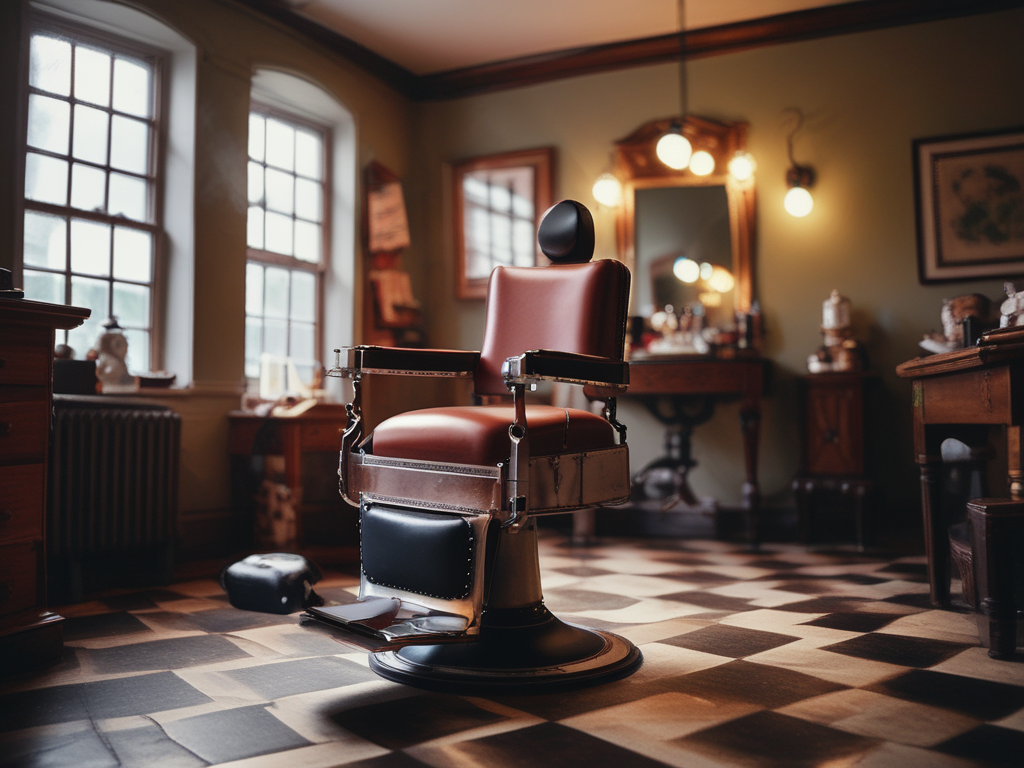
I had my hair cut earlier this week and experienced a first: the barber shaved the outside of my nose.

I am blond and never been hairy; so, I was rather shocked, as the barber told me what he do if he were the England coach, he ran the razor over my nose.

In my Tooting secondary school the boy (?) who developed hair (not on his nose) first was looked upon as a demi-god and immediately voted unofficial form captain.

When you’re twelve you’re desperate for hair to grow everywhere; when you’re sixty-seven you’re wondering where it’s going to sprout from next.

Up until this week my un-Pinocchio-like nose had been untouched by human barbers’ hands, let alone sharp implements.

Clearly the barbers is a place where you experience firsts in your life:  When you don’t have to sit on the wooden booster plank; when you no longer have your mum telling the barber what you want (usually armed with a photo for a years-old magazine).  These are all rites of passage which means you have become a man.

My not reaching manhood was put into sudden realisation the first time I was asked if I wanted anything for the weekend?

“A new boat” I had replied, as that weekend I was going to the ponds on Clapham Common.   Not the entertainment the barber had in mind.  Next!

Health, efficiency and safety

My first day of work was 30th September 1974.  I remember it vividly.

Wearing flares on the platform en route to London of Balham station was a mistake,  The wind, generated by the oncoming Tube trains, created a Marilyn Monroe-type effect of nearly lifting me off the platform.   Because of the copious amount of trouser material, if it wasn’t for a particularly attentive guard suggesting I get them away from the doors, I could have been half naked by the time we got to Stockwell.

Safely arriving at Embankment, I had a short walk to my office in Adam Street.  I was to be a clerical assistant with the DHSS.  The boss I had put the SS into DHSS. 

I really wanted, like my dad, to go into advertising but, armed only with a couple of O-levels which enabled me to quote bits of King Lear and name the participants in the Russian Revolution of 1917, a clerical life was to be my world.

I was given a clocking-in card to check I’d done my allotted hours; lengthy school summer holidays were a thing of the past; there was playtime. I couldn’t go home for lunch; everyone was Mr, Mrs or Miss (Ms had yet to be created); they counted the paperclips on your desk.  It was a miserable existence until, six-months later, I started a career in advertising.

The only saving grace, for a 17-year-old boy, was the messengers who worked in the building had a magazine library which made the copies of Health & Efficiency I’d see at the barber’s seem very, very tame.

Pocket billiards

As I no longer own a fob watch, I’ve stopped buying three-piece suits. 

When I first started work in London I’d always buy a suit with a waistcoat; not for any stylish reason, but because it was colder in the ‘70s – the end of the last Ice Age. 

Occasionally they had “take your hamster to work“ day – so the extra pocket was useful – although it would get quite crowded in there if I was playing snooker.

The tiny pockets of the three-piece suit had manifold functions: hamster and chalk aside, you could hook your thumbs in and do impressions of Mussolini.  This was marginally more acceptable in the ‘70s than the ‘40s.  Although one Mike Yarwood never tried. 

You could store your train ticket in one.  These were the days when contactless meant you’d not heard from someone for a while or was a person not stored on the flip-up phone directory which sat on a table in the hall beside the phone. 

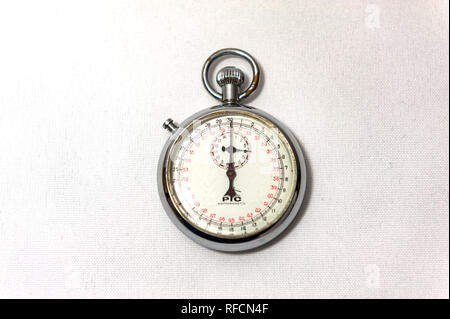
I used to have watch in my waistcoat.  It was second-hand, broken and actually a stop watch.  It was forever stuck on 3.59.  Either the owner had had some terrible accident just before four in the morning (or afternoon) as the watch had stuck at that time, or it belonged to Roger Bannister.  

He never owned a three-piece suit.  He did, however, have a three-piece suite, as he had to put his feet up a lot. 

Strictly no ties

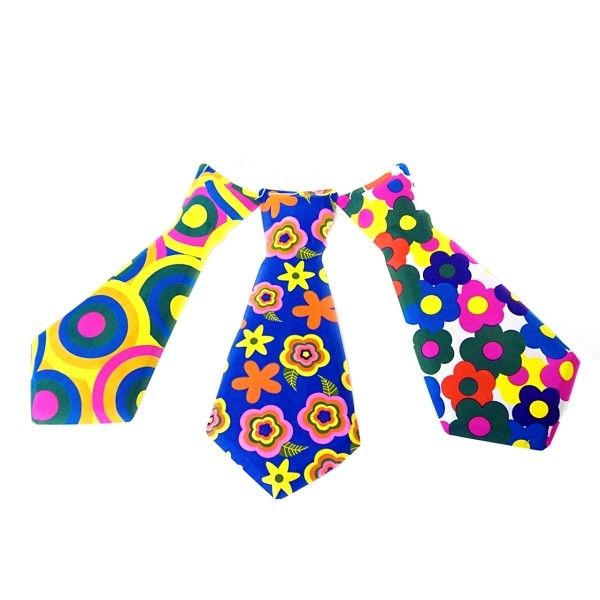
I’ve been watching some of the 500-odd 15-minute Look at Life films on TV; a snapshot into the ways of life in the UK between 1959-69.  In every film, most people are wearing ties – as did some of the pigs in the quarter of an hour  “On the farm” insight.

When did people stop wearing ties? 

At primary school, we wore ties (on elastic left over from linking my gloves together); at secondary school we wore ties which depicted which house you were in or if you were good at certain sports.

Oddly, during the late ‘60s and early ‘70s, the vogue (mainly with school ties) was to get the knot as big as your head and have nothing left to tie the tie with.  It looked like a giant bat was attacking your neck – you almost expected Christoper Lee or Ingrid Pitt to be helping out in the school tuck shop. 

Pupils secretly thought Roy Castle would visit and thus get them a place in the Guinness Book of Records for having the stupidest knot.

As the seventies progressed, so collars grew extraordinarily big, so your tie’s knot had to be even bigger.

My first work tie was maroon – it looked like I’d stolen it off a bishop. 

There are so many variations of a tie knot.  I always went for a Half Windsor – mainly because it was a move Kendo Nagasaki frequently used on a Saturday afternoon.

The only time I wear a tie these days is when I’m gardening: a knitted green one which wards off slugs.

Martians this way

As I kid, I’d watch programme about time travel: Dr Who; Lost in Space; Andy Pandy.

I’d wonder, if I were to dig a hole in Tooting Bec Common and bury a box in it, what would that box contain which would educate future generations or aliens arriving to discover the culture of sixties and seventies London?

I’d put in my Tufty Club hanky.  If you’re arriving from Jupiter, you’re going to need to know how to cross the road safely.

A box of Tide would be essential.  Travelling several million miles from another galaxy, you’re going to need to do some washing when you land.  You might be a superior being, but you still need to be clean.

A Galaxy obviously as the new visitors need to know we knew the word for where they’ve come from.  Obviously, as a teenager growing up, I was unaware of sell-by dates.

A box of dates, to show why Christmas is special.

The single “Ernie” by Benny Hill to demonstrate we have a sense of humour and in-depth knowledge of music.

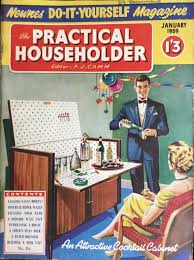
A copy of Practical Householder magazine in case they don’t like some of our buildings.

A book of Green Shield Stamps as you can never have enough towels.

A copy of Shoot should Accrington Stanely have made a rapid recovery back to Division One by the year 2525.

People in the future will believe that some milkmen are not to be trusted; spirit levels were worshipped at Christmas and we did anything to get quadruple stamps.

Ashes to ashes

Because my family were such prodigious smokers, each household contained a wide variety of ashtrays.

My nan had one where, if you pushed the top – like a child’s spinning top, only without the clown painting on the side – the ash would disappear.  When I was young I thought the contents would vanish into a hidden void far beneath Balham High Road.  

One of my dad’s hobbies was stealing ashtrays.  We had one with Bacardi on.  My mother, not wonderfully educated, thought Bacardi was the centre forward for AC Milan.  It was triangular –  like a boomerang; I found out very quickly it wasn’t.

A lot of our flat was sponsored:  our glasses had Esso emblazoned on them – my Ribena often tasted of diesel.   Most of the pens came courtesy of the local Joe Coral and all the scrap paper I was allowed to draw on had the Admiralty (where my mother had worked) logo on.  I became very good at drawing warships.

Our mugs all mysteriously came from various branches of Little Chef.  Quite appropriate as the only thing my mum could cook was an all-day breakfast.  She would do most things for a slice of black pudding.

99 scary balloons

My paternal grandmother owned several Staffordshire figurines.

When I was quite young, the journey from Balham to Maida Vale would terrify me as I found the ornaments scary.

One was an old crone (probably about my age now) who had several balloons.  I envisaged that, aside from selling balloons, she would wait besides the Guillotine, cackling, smoking a small clay pipe and swearing in French.

There were also plates on the walls too.  This confused me – did my north London relatives stand up and eat – and eat sideways?

The plates mostly depicted hunting scenes – I assume my nan went out, after I’d left, to look for stags running wild up and down Baker Street?

None of my south London relatives had ornaments or plates defying gravity.  We had no hunting on Wandsworth Common so, if we had have had plates, they’d have shown a Black Maria; Princess Anne opening the new Balham Sainsbury’s or local lad, Mike Sarne, inviting EastEnders stars outside.

If I didn’t have a pathological fear of birds, I’d have loved three ducks hovering over my fireplace – readying themselves to dump something on balloon lady below.  Now, that would have made her swear!

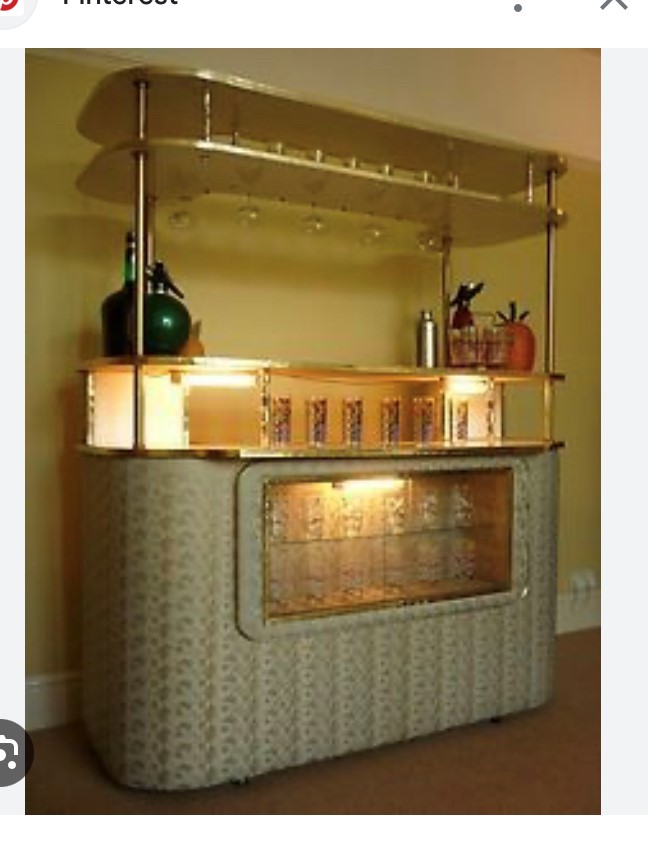
Setting a small bar

The few times I was allowed to go with my parents to socialise at other SW17 houses, I was always amazed where the drinks where kept.

In our flat, if you were a visitor, you’d assume my family were sponsored by Bell’s or Gordon’s.

The drink wasn’t stored in some fancy cabinet; in our flat, it was in the mandatory brown sideboard, next to dad’s old Chelsea programmes.

In other peoples’ places the Black & Decker had been working overtime as one wall had been transformed into a small bar – albeit without the dartboard and cardboard sleeve of packets of pork scratchings.

One family had a globe.  The globe would open up and a selection of alcoholic beverages were instantly displayed – I assumed Marco Polo had a similar container?  I tried spinning it once and nearly broke my wrist.  Although, only until recently, I thought gin came from Abyssinia (it was an old globe) and Soda Stream was a lake in Africa.

Some families had clearly won decanters at various fetes; many had collected glasses from Esso.  In 1970, they may have swapped them for a card featuring Martin Peters.

Once, trying to help out, I thought I’d move the pineapple off the Borrowers-sized bar; having picked it up by the top, ice-cubes suddenly scattered to all parts of the shagpile. 

For the remainder of the evening I was condemned to sit, and not move, by the Dansette record player.  It’s not unusual.

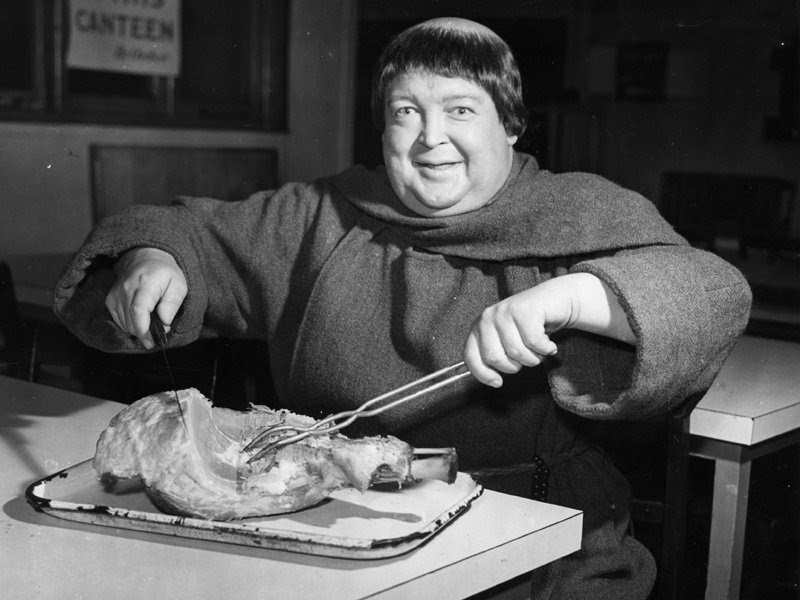
Deep, fat Friar

As if going to big school, and having to wear long trousers in September 1968, wasn’t alien enough, what I didn’t anticipate were the new words I’d have to learn.

We were told about prefects.  At my first playtime I expected to see a fleet of Ford Perfects lined up on the rugby pitch.  How surprised I was to see several bigger boys, adorned with their badges of authority, checking no one ventured onto the rugby field.  The rugby field confused me too.  Why had they built two longer poles above the football goalposts? Clearly they’d had a job-lot delivered?  And where was the penalty spot?

During the lunchbreak we learned about a thing called “the tuck shop”.  I was a massive fan of the ITV series Robin Hood, which ran in the early ‘60s; I thought we’d meet one of Robin’s merry men.  I was, however, praying it wasn’t a travelling barber’s.

We were also informed, should we ever need to temporarily leave our Tooting school, we’d require an exeat.  At primary school we’d not studied Latin.  We’d learned how to a throw a beanbag, pretend to be a tree during Music and Movement and drawn lots of dinosaurs; we’d never had to conjugate Latin verbs.

But the most confusing word for me was: homework.  My inability to get my head round this word was duly reflected in my 1973 O-level results.

Gloria sic transit (Gloria was ill on the journey).

Clocking in

Growing up, I would listen to aged relatives (it was that, or have your pocket money come to an abrupt halt) and wonder if any of them were related to Stanley Unwin?

I had a paternal grandfather who, if you asked him a question, would always answer with: “I’ll tell you for why”.  He was from north London, so perhaps, having been brought up south of the River, having far too many prepositions in a sentence was considered the norm?  Or perhaps he was a precursor to Google Translate? To paraphrase the Catchphrase catchline – “it’s good, but it’s not right”.

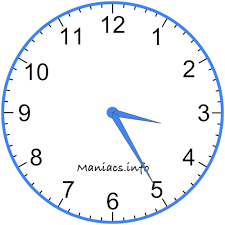
Where cab drivers dare not go after 8.00, my maternal grandmother, when asked the time, would answer: “five and twenty past” or “five and twenty to”.   Is this a generational thing and people in SW17 were taught to speak as if they were still living in Georgian London?

I bet, these days, no one is told “wait ‘til your father gets home”; as, with the advent of working from home, most fathers are already home, albeit working in a room which originally housed coal.

With raging inflation, I wonder much people should be paid for their thoughts?  Certainly not a penny.

And you didn’t have to do seven-years at medical school to give someone a taste of their own medicine.

Curiosity has been reported to the RSPCA.