A book is not just for bedtime

zeppelin-10177_960_720

With the exception of Rupert the Bear annuals, growing up in the sixties didn’t offer the choice of books available to kids today.

My book collection consisted of a second-hand 1958 Denis Compton annual, an I-Spy Zeppelins (probably third-hand) and three of the set of twenty-four Noddy books;  I remember vividly Noddy Book No. 4, entitled: “Here comes Noddy again” – this was about Noddy being kidnapped, not his sexual prowess.

I have three grandchildren, two of whom are nearly one-year-old. Their combined libraries would rival those of the British, Bodleian and Balham!

One series which dominates the twins’ bookshelves is “That’s not my Something(like puppy, kitten unicorn).  The premise is the first five double-pages features puppies, kittens or unicorns not belonging to the reader.  The sixth double page spread reveals the ostensibly lost puppy/kitten/unicorn with the phase, That’s my unicorn – its head has a massive stick coming out of it!” (or something like that)

We never had books this exciting growing up, and I pondered if we had, what they’d have been?

“That’s not my ration book; all the stamps are missing!”

“That’s not my home-made go-kart; none of the constituent parts are stolen!” or

“That’s not my TV; Bonanza’s never in colour, therefore a valve has blown and the set’s on fire!”

Night, night children everywhere, unless you happen to live in the dark, dark wood, as featured in Noddy Book No. 4.
 

Beat Your Classmates Out Of Doors

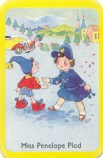
penelope plod

Whilst at my Tooting grammar school I honed my skills as a card shark. Well, played a lot of rummy.

During a wet playtime this would be our classroom-bound pastime. No money was ever exchanged, although we could have played for tuck-shop-bought doughnuts, although this would have made the desks incredibly sticky; I’d struggled with secondary school education enough without having jam smeared over pictures of Gladstone and Disraeli in my history text book.

When I changed schools in June 1972 to go to Emanuel, rummy was not the card game of choice during wet playtimes. Because it was a posher school, some of my new classmates played bridge.

Before embarking on my fifteen-month sojourn at the Clapham minor public school, the only card games I’d ever played, aside from rummy, were Beat Your Neighbours and Newmarket. (Although I’d only played Newmarket on Boxing Days with family friends.  We’d play for halfpennies – how none of us ended up attending Gamblers Anonymous sessions I’ll never know!)

During these wet playtimes I’d look nervously on, but very quickly arrived at the belief that bridge was like rummy, only with more cards, the word “trump” was used a lot – a word I’d only heard my Nan speak, but this was a euphemism rather than something of an advantage – and there seemed to be a lot of inactivity for one quarter of the players.

I was eventually allowed to play. I say play as I seemed to spend an inordinate amount of time being the “dummy”.  If I’d have known this would have happened I’d have done some research before like buying the 1972 Titch and Quackers Annual.

It was the posher kids in my class who played bridge. I assume their parents ran bridge evenings which, given we were all living in suburbia, probably led to swingers’ nights; although you wouldn’t have wanted to be the dummy there unless you actively wanted your eyesight to worsen.

I rapidly realised that bridge was not for me and decided to extricate myself from this elite group. With the cards dealt for another rubber (bridge seemed to full of comedy words) and me being, yet again, the dummy, I watched, and as soon as the second card was placed on the jam-free desk, I shouted “SNAP!!”   The look I received could have been a real-life representation of an HM Bateman cartoon.  I grabbed my suit jacket (of course they didn’t have blazers!) and went outside to contract hypothermia.

I never played cards since, the withdrawal as legal currency of halfpenny bits simply accelerated that.

I found it strange that no one in my class at Bec or Emanuel wanted to play Happy Families. I always fancied Penelope Plod, the policeman’s daughter.

Rubbers are off, love

Now wash your hands

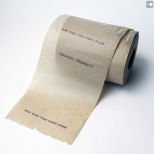
izalmessage

Singing “Happy Birthday” is sufficient time to clean your hands.  This should take about twenty seconds, unless your friend, to whom you’re singing happy birthday has been called, by his or her Welsh parents, Llanfair­pwllgwyngyll­gogery­chwyrn­drobwll­llan­tysilio­gogo­goch, in which case, this will take the best part of a fortnight.   I’d heard this “Happy Birthday” theory on the radio the other day.  However, it didn’t occur to me that it’d be the song written by a couple of Louisville sisters in 1893.  So, after I’d “powdered my nose”, I stood by the office wash basin and began to sing, in the style of Stevie Wonder, “You know it doesn’t make much sense; There ought to be a law against; Anyone who takes offense; At a day in your celebration”.  Four minutes and forty-five seconds later (the length of the 1981 hit) not only were my hands certainly clean, they were also bleeding profusely with all the rubbing.  I really shouldn’t believe everything I hear on the radio.  I’ve never been the same since I heard Lord Haw Haw play “Flowers in the rain” on Radio One’s first day.  


Don’t shoot the messenger

Dwarf Hamster - 6 weeks old

43-years today I started work. With two O-levels you tended not to be placed on the fast-track graduate scheme; you were, however, almost over-qualified to be a messenger.

My role for the first three-months of my advertising career was as a messenger; my role was, twice a day, to travel to Fleet Street, where most for the major UK national newspapers were and representatives of most regional newspapers: 63 Fleet Street housed the Southampton Evening Echo; 85, Portsmouth News and Sunderland Echo, 107, Isle of Wight County Press (handy if you wanted to know what was going on with cats and the rooves of Ventnor supermarket car parks).  I had to collect newspapers in which my company’s clients had run advertisements.

During my three-months I worked out I could save the money I’d be given for bus fares by walking from the agency in Howland Street to Fleet Street (this is how money laundering begins!).

Because I travelled alone I would rest in the Wimpy on Bride Lane or Mick’s Café on Fleet Street. I would dream that, with all the savings I was making on fiddling expenses, I’d open my own café, which, of course, would also be called Mick’s Cafe.  I also found that, if I’d drunk too many ice-cream floats in the Wimpy, there were very nice toilets, where Kent Messenger was on 76 Shoe Lane.

On one occasion, for our client Martini, I was given an A-Z and told to go to Brewer Street to collect a copy of Men Only, where the client had an ad on the back cover.

I’d never been to Soho before. Not knowing where the offices of Paul Raymond Publications were exactly, I walked quite slowly down Brewer Street.  As I walked down the street thinking the lighting bill must be quite large, a man suddenly appeared from a doorway to distract me from my utility costs ruminations.  “Would you like a girl for the afternoon?” he asked.  I thought to myself, is this a bit like having the school hamster for a weekend – a temporary loan?  And would he be supplying the girl equivalent of sawdust and sunflower seeds? I replied, “No thank you, I need to get this month’s Men Only” – he looked at me and, seeing the thick lenses of my glasses, assumed this was probably not the first time I’d sought out a copy!

I found the building and, after asking the receptionist for a copy of that month’s magazine, waited as several scantily-clad women walked past me. I assumed there’d been some failure in the building’s air-conditioning.

(Sadly) I never returned to the building and the nearest I ever got to seeing scantily-clad women was an old woman in a bikini on a beach in Hythe, plastered over the Kent Messenger.  I’d often wished to see similar pictures in my local Balham & Tooting News, but a topless Alf Dubbs was the nearest I ever got.

I look back, 43-years later and wondered that I should have thought less hamster more beaver!

An aardvark is not just for Christmas

aardvark_thumb.ngsversion.1474903830105.adapt.1900.1

I was a dog owner for half a day.

I was ten and my mother thought she could win Cruft’s; the procurement of a West Highland Terrier would show us the road to victory.

What my mother had not anticipated was the trickiness of owning a dog whilst living on the fourth floor of a block of flats. I think she’d anticipated the dog either being on an extremely long lead or possessing the ability to fly (perhaps she thought she was buying a Harrier rather than Terrier?)

My mother also found out, in these fateful few hours of dog-ownership, that un-house-trained dogs giving no warning of doing a pooh, nor have the talent to order a lift to the correct floor to get to down to the communal gardens.

To be fair to the dog, during these morning hours, my mother had been sporting her newly-acquired curlers which would have loosened the bowels of most living organism.

By lunchtime, with a very nervous and understandably incontinent dog, the dog was returned to its previous owners, the people who also owned La Patisserie on Balham High Road. They had got rid of the dog as it had (literally) eaten all the pies. The dog had now been returned to be a perpetual menace to a selection of Fondant Fancies.

To avert my being so distraught over the loss of the free-poohing dog, my mother promised me a pet (as long as it wasn’t a dog, obviously). I fancied an aardvark, but mother said it would ruin her newly-laid shag-pile carpet with its burrowing.  I had (and still have) a terrible fear of birds, so a budgie, parrot or pterodactyl (we’d just started studying dinosaurs at school and hadn’t got as far as the extinction bit) were all out of the equation.

I chose a mouse, which I unimaginatively called Jerry.  Its toilet habits were similar to the terrier, only on an acceptably smaller scale.  Throughout the sixties, seventies and most of the eighties, I never owned another pet, having lived in various flats scattered around south-west London.

I now live in a house and an aardvark is back on the agenda as I have an ant infestation and it will save me money on the special powder. I think one would make a great pet, although a right bugger if it ever caught a cold!

Geneva unconvention

pink boots

Whenever I see the spurting fountain of Lake Geneva, I don’t think of many a closing scene of the “Confession of” film series; I think of Alexandra Bastedo.

She was my first crush.

Sadly, for me, when she first appeared in front of me (albeit through a small black & white screen playing Sharron Macready in “The Champions”) she was already 22, I was barely 11.

I loathe to use the word rousing in a public forum, but there was something about her which made me instantly regretting having started at my all-boys grammar school in Tooting two weeks prior, coupled with being a member of an all-male choir.  When was I ever going to meet someone like Sharron Macready?  I learned, after a few weeks at Bec School, that this kind of person wasn’t going to be teaching geography (let alone biology – I would have to make do with learning about the reproduction system of amoebas, rather than getting sex education in an after-school class from Alexandra Bastedo).

I would watch “The Champions” avidly, every Wednesday evening during 1968 and 1969 with my nan in her south London flat whilst we ate Bird’s Eye’s Cod Fillet and chips (as only nans can make chips). I often wondered what it would have been like having Alexandra Bastedo bringing my cod and chips?  If she smoked copious amounts of Player’s Weights and had no teeth – quite similar!

This new-found affinity with girls had clearly kicked in. I procured, and stuck across most of my bedroom wall, a gigantic poster of Nancy Sinatra wearing pink, thigh-length boots (in which I assumed she’d walked).

I look back and feel I could have got lucky with Alexandra Bastedo as she’d dated Omar Sharif. Sharif was famed for his Bridge-playing ability – I was rather good at Beat Your Neighbour.   No brainer, Alexandra.

“The Champions” ran for thirty episodes and was used in several other countries. In France, it was called Les Champions – which was, coincidentally, the name of the bloke who ran Nemesis, the organisation for whom Sharron Macready was employed as a spy-cum-doctor.

Next week: Why I tried to learn Italian in case Claudia Cardinale ever moved to Balham!

Sign of the Ford Zodiac

zodiacmk3

There should be playtime in the workplace. Fifteen mental minutes when you can run around before going back to your office, sweating like a pig before creating more content for your last primary school year county project; never has so much rubbish been written about Middlesex as there was by me in my south London primary school in the late sixties.

Within my school most boys wanted to play professional football or cricket (we weren’t allowed in the girls’ playground, which was no bad thing as this was where the threat of kiss chase lurked and, as a ten/eleven-year-old boy, all girls were considered soppy). (My mother had warned me that using other peoples’ toilet seats would induce VD; for me, kiss chase was simply the start of a slippery slope towards a life of contracting sexually-transmitted diseases.  My mother’s Chinese lantern presentations on the subject make me wonder how I ever talked to girls, let alone realise that kiss chase may well have been better fun than three-and-in).

In the confines of the boys’ playground, we’d emulate Peter Osgood or Colin Cowdrey – some of the boys who weren’t very sporty played cover drives like Peter Osgood and chested balls down and volleyed them like Colin Cowdrey. This was our desire, except for one boy in our class.  He wanted to be a Ford Zodiac.

Whilst we would hope, while we were running around, that possibly there’d be scouts from Chelsea or Fulham or Tooting & Mitcham if you were slightly more realistic; this one lad was hoping to have someone spot him from the Dagenham Motor Works. We all wanted to be footballers, he wanted to be a faux-wood dash board, leatherette steering wheel or alternator.   We were trying to make the ball swerve off the outside of our foot like Pele, our mutual classmate would run around, changing an imaginary gear like Marcel Marceau.

I never got to play for Chelsea, but then, fifty years later, I’ve never had to replace my clutch, although I think I’ve started to leak brake fluid!

Bus-spotting (like train-spotting but with less heroin)

trolley bus

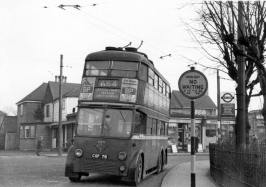
Although destined, as a bit of a geek, to become a train-spotter, an unnatural affinity to trolley buses deigned this was never going to happen.

As a kid, my nan had a grassy-knoll-type flat whose window overlooked Balham High Road; I would spend hours staring out of this window making a list of the buses travelling up and down the street.

I didn’t need an especially large sheet as there were only three routes: 88,155 and 181. I’d sit, eating my nan’s Callard & Bowser’s toffees (she had no teeth, so toffees were a complete waste on her) recording each bus as it passed.  I would do this until I spotted my Auntie Vera’s alighting from here 155 as she returned from her job at Freeman’s near the Oval.

Sometimes a complete spanner would be thrown in the works by the appearance of a 711 Green Line Bus. This vehicle never stopped at any of the two stops I could see so, in my mind it never existed – a bit like the little-known philosophical theory, Schrödinger’s Bus. It certainly was never entered onto the toffee-covered list.

In the mid-60s, when I was around eight, my Auntie Vera decided she would take me on a trolley bus. We travelled on a 155 to Wimbledon where we picked up the trolley bus to Belmont.  It might as well have been to Belize, such was my geographical lack of knowledge anywhere outside SW17.  Ironically I now live near there (Belmont, not Belize, where I still don’t quite know where it is (it is only near Belmont alphabetically)).

Three years on and I had my next out-of-Balham experience. I was selected to play for the school cricket team.  The first fixture was away at Sutton Manor (now Sutton Grammar).  I stood, with my dad, on the platform at Balham, looking in a direction I’d never been before (dad had assured me they’d all been lavender fields the week before).  I assumed that, before we even got to Sutton, we’d have fallen off the end of the world.

When I changed schools from Bec to Emanuel I discovered several of my new form-mates were into plane spotting. I asked my dad if this would possibly be something for me? He replied saying: as long as I knew what an ME109 looked like, I’d probably best stick to bus-spotting.  Any more fares, please?

Luxembourg Calling

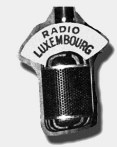
luxmic

Until I was thirteen, I thought music was probably best heard under a thick blanket.

Armed with transistor radio, torch, blanket to muffle the sound of the transistor radio and ears which would make a pipistrelle bat jealous to listen out for potentially vituperative parents, in the evenings I would listen to Radio Luxembourg. I also had a pencil and paper to list the midweek Top 20. Unlike the BBC, who had their Top 20 inside Pick of the Pops, Radio Luxembourg’s offering was midweek.  My bed had so much stationery in it, it resembled a branch of WH Smith.

Because we lacked money, and to earn a few bob more, my father had a twice-weekly evening pools round around the back streets between Tooting High Street and St Benedict’s Hospital. My mum would drive him in our Austin A40 to his destination and follow him round (like kerb-crawling except my dad didn’t have the opportunity to stick his head in the car to ask “inside or out”).  I would sit in the back, listening to my radio.  These were days before car radios (which kept car radio theft down to a minimum); I would sit, one hand on the radio almost glued to my ear and the other on a pencil to write down the chart as it was unveiled.

Eventually we’d head home with my dad having been to one too many houses with people hiding behind their respective sofas. The chart, at this point, would only be about mid-way, so my sheet, with the numbers 10 to 1 remained blank.

By the time my strict parents had sent me to bed (ostensibly to sleep) the top five were yet to be revealed. Once the light was turned off, my listening post was hastily erected; important items were produced from under my pillow (this must have confused the Tooth Fairy).  My writing kit and torch came into their own as I rapidly wrote down (probably not grammatically correct) songs like, “signed, sealed, delivered, I’m yours”.

My interest in music coincided with my rapid eyesight decline (I have since learned my myopia was, due to another hobby discovered as a teenager, not helped, either!). I don’t think this was aided by some of the 70s bands having ridiculously long names – why couldn’t groups be called Lulu or Dana?  Why choose Dave, Dee, Dozy, Beaky, Mick and Tich?  If I’d have wanted to witness such names I’d have watched episodes of Trumpton.