Mum’s gone to the Ottoman Empire

Many people use social media.  My activity on Myspace (something I thought was for people suffering from claustrophobia) and Friends Reunited (they really weren’t your friends or you’d not need to reunite with them) isn’t as active as it once was. 

Another social media platform I no longer use is Twitter.  It is now called X.  Growing up in the ‘60s and ‘70s in rural Balham (I lied about the rural bit) X meant one thing: the film you weren’t allowed in to see. 

Looking as young as I did, I was more likely to see Charlie George starring in an acting role at the cinema rather than Susan George!

Changing Bejam to Iceland was just as confusing, especially with the tag line “Mum’s gone to Iceland”.  This made many small children believe that one day their mothers would suddenly disappear to some Nordic wasteland.  I was always asking my milkman if he was aware of where Reykjavik was?

No doubt Philippides is turning (he can’t run anymore) in his grave now his sporting event chocolate is called Snickers (which is what American call plimsolls).

MFI is now called the Secret Intelligence Service.  However, their bookshelves are better quality.

Anyway, what do I care?  I’m about to go on holiday to Czechoslovakia via Abyssinia to get some Opal Fruits in Duty Free!
Tempus fudge it

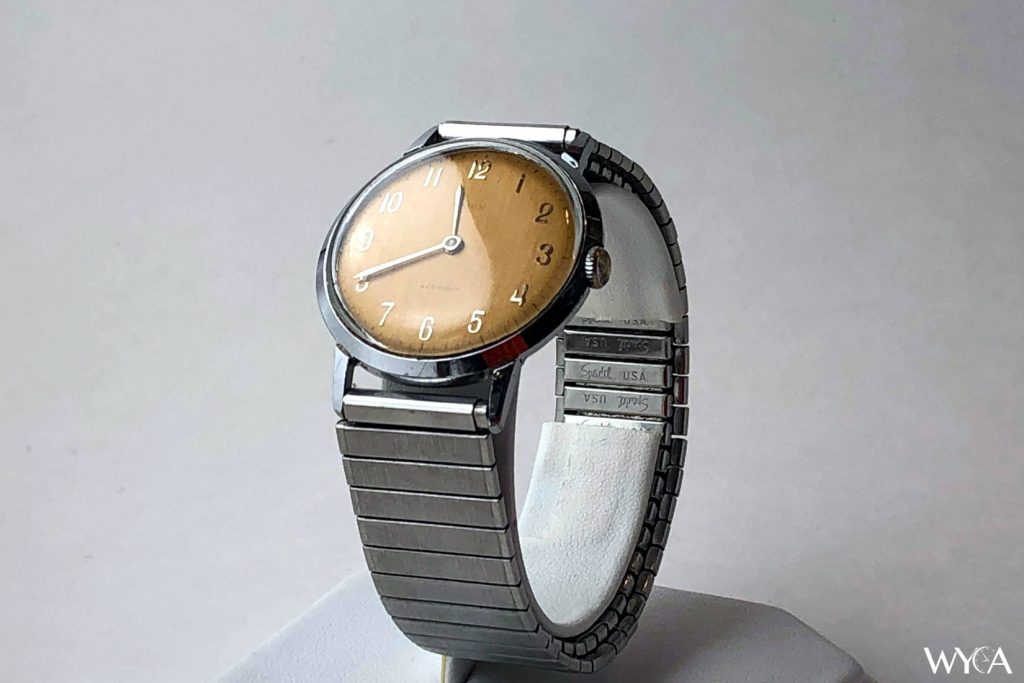
You rarely see young people wearing watches these days.  If they do, it probably does tell the time, but also it tells them how much water they’ve drunk; how fast their heart is beating and the results from Newmarket that afternoon.

I was encouraged to tell the time from an early age and had my first Timex bought for me from a Balham jewellers in the mid-60s.  The man in the jewellers was disappointed as neither parent were buying any expensive rings or bracelets, but solely a watch where you got change from a ten-bob note.

My mum owned a perfectly good watch.  However, this didn’t stop her asking policemen (or anyone in a uniform for that matter) the time!

I had the Ladybird book on telling the time.  I learned that “at 12 o’clock Mummy cooks dinner” – until my mum re-wrote it to say: “at 12 o’clock Mummy opens her first Guinness”.

The final page was: “at half past seven we are asleep”.  I could never understand this during the summer when there were still about three hours’ of daylight left!  But, as you get older, so that’s horribly near the truth again.  What the book didn’t tell you was “it is two thirty in the morning and you realise you really shouldn’t have had that Bournvita”.

Whenever I’m asked what the time is, I look at my watch and tell people where the big hand is; they soon seek their information elsewhere.

Deskbound

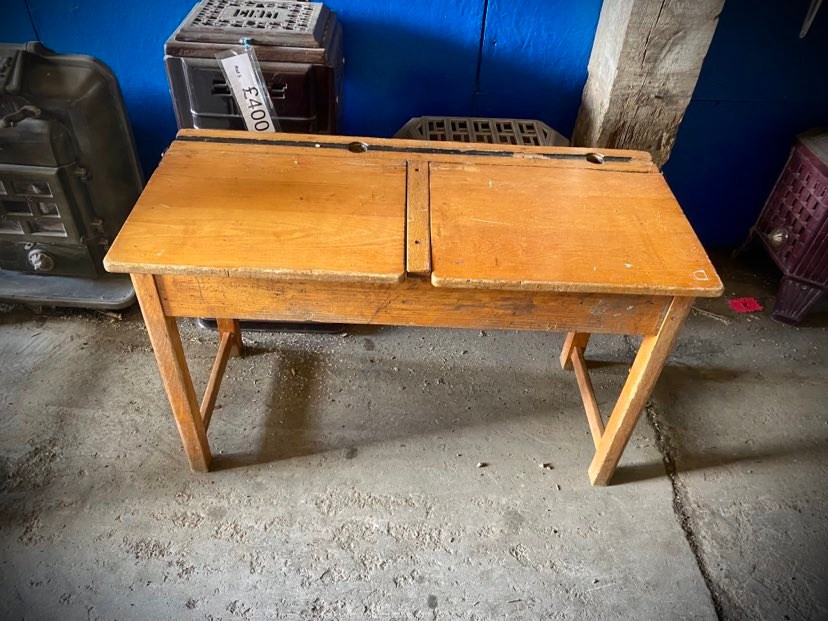
There were many changes for me going from primary to secondary school.  Aside from getting used to my long trousers chafing, we had actual desks.

At primary school we had tables.  Our new school, deep in darkest Tooting, had wooden desks.

There was much carving on my desk.  The desk was so old, I almost expected to see drawings of buffalo or mammoths carved into the top.

The desk had a lid on it.  I gingerly lifted it up, checking that no one had written “Pandora was here” on it.

Assuming that all the world’s ills were not in the desk, ready to fly out, I continued to open the lid; the contents were disappointing.  There were no Post-It notes on the inside with any instructions for finding secret tunnels; invitations for illicit liaisons (no bad thing given I was only eleven and it was an all-boys’ school) or the answers to that week’s French vocabulary test. 

There was, however, a fossilised iced-bun.  At first I thought this had been left by some Neanderthal who’d lived in Tooting when it was all lavender fields and/or marshy swamps?  It wasn’t until the first break, when iced-buns were sold, that I realised I hadn’t uncovered a neolithic food storage site.

I did discover, mainly during supremely dull French lessons, that the desk was very comfortable and easy to sleep on. One of the many reasons I failed French O-level or never became a palaeontologist.

Shouting down

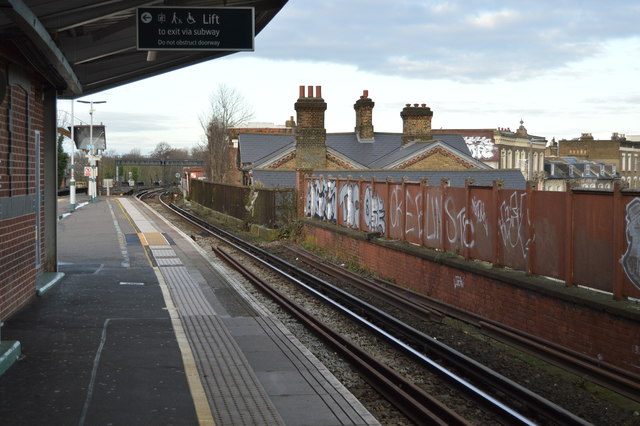
This week I was travelling to London, changing trains at Clapham Junction. 

This is the Mecca for trainspotters: Clapham Junction is the busiest station in the UK.  It’s not actually in Clapham, which means, if you are a trainspotter, you will need to be good at orienteering too.

In the early ‘70s this station was one end of my daily commute.

I would walk to the station from my school every evening with several friends.  One friend lived in Wimbledon.   His platform was 100-yards away from mine; mine headed heading towards the Gateway to the South.  When you’re fifteen, you couldn’t give a monkey’s about other people around you; my friend and I would continue our conversation across several platforms – like human loud-hailers.

Back then, there were no electronic indicator boards – for any form of transport.  These days, you know exactly when the next bus or train will arrive.  In the ‘70s, you could be at a bus-stop and sometimes feel you were on the set of Waiting for Godot.  

Back on the platform, I’d look hopefully at the station staff as they dipped into their four-foot high box which housed the train destination boards.  Until the one mentioning “Carshalton” was withdrawn and inserted into its rightful place, I continued shouting across many platforms, asking: “how do you draw an ox-bow lake?” and “just how many bloody Pitts were there?”.

Gute Reise, as my friend’s Austrian mum would have said.

Great Scot!

When I first started work, I couldn’t wait to get into the office.  Not because I liked work, but because I always had a packet of Royal Scot biscuits hidden in my desk.

My Tube journey from Balham to Warren Street would have me drooling at the thought – I had to be very careful I didn’t dribble over anyone’s Daily Mail on the journey.

Other items in my drawer literally had my name on – I’d written “Mike” in Tipp-Ex on anything which could be nicked inside my desk.  I had a calculator, as well as a stapler; a tin of boiled sweets (you never knew when you were going on a long car journey); paperclips; emergency packet of Royal Scots; a selection of foreign currency (MI6 could ring at any time).

These days, with paper being used less and less, the contents of desk drawers are vastly different: phone charger; spare lanyard; small, French dog.  For those who have been working from home, then they will simply have a spare pair of slippers, surgical cushion and a manual showing you how to unmute yourself on a Zoom call.

Sadly, Royal Scot biscuits are no more. They are extinct, like the pterodactyl – a Royal Scot biscuit had a smaller wing-span.

For Royal Scot biscuits, it’s “goodnight, Vienna”.  I hope this doesn’t make Viennese whirls an endangered biscuit.

Not one Cornetto!

I never had as much as a chocolate sprinkle from the ice-cream van growing up. 

I lived on the fourth-floor of my Balham flats; the moment I heard the strains of Greensleeves or ‘O Sole mio (which means raspberry ripple in Italian), I’d put on my Tufty Club slippers and leg it down four-flights of stairs.  I’d reach the bottom and hear Greensleeves dying in the distance as the van made its way down the High Street towards Clapham, a town where most people would do anything for an Oyster.

To get any form of lolly, tub or 99, you had to be as fast as Roger Bannister; I was more Minnie Bannister.   I would arrive to see hundreds and thousands of hundreds and thousands lying on the street.  Evidence I’d missed out yet again.

Having attained a semaphore badge with the Cubs, I could have sent a message to Mr Whippy

When learning semaphore we tended to learn phrases like: “I think the boat is sinking” not “one cornet, please”.  By the time I’d have gone down the many flights of stairs, it would have melted. 

Flake’s off, love

Wild, wild, wildebeest

Do people still have room-dividers?

I didn’t in my Balham flat, but I would often go to friends’ houses where the kitchen had a series of beads and/or coloured strips hanging down from the doorframe, separating it from the rest of the house. 

What were they there for?  Was it to give an air of mystery to the kitchen holy of holies?  Hide embarrassing old relatives? Stop herds of wildebeest rampaging into the lounge?

Anyone going to the cinema in south-west London in the sixties would remember the ad for a local restaurant which advertised: “it’s so good, even the cook eats here”.  The reveal would be the chef, behind the dangling beads, literally eating his own lunch.

I think, budding cooks believed that the magic ingredient to a good meal wouldn’t be to add a selection of exotic spices, but to erect a series of dangly things.  Who needs Mrs Beeton or Fanny & Johnny if you’ve got the threads of Joseph’s coat hanging from your kitchen doorway?

How were these things created?  My belief is that many a room divider was made out of beads stolen from school abacuses.  This would explain why many people at my school could only count to five by the time they were eleven.

If there was to be privacy, you couldn’t knock, as your hand would go straight through – thus knocking over the embarrassing relative.  At least that would have saved her from the stampeding wildebeest.

Upper case twit

I had to buy a new phone this week.

What they don’t warn you in the shops is that you’ll have to remember every password for every app you have. 

Having unsuccessfully tried Gerd Müller’s birthday, Alan Knott’s wedding anniversary and the square root of two, the words I no longer wish to see are “forgotten password?”.

Before phones etc., the last time I needed a password was in the early ‘70s, doing Am Dram in a Balham church hall, saying the words, “Open Sesame”.  (This would have been good if we were performing Aladdin; sadly, we were doing King Lear).

I never did CCF at school (I visited old ladies in Clapham, which was far more dangerous than being on a school field with fellow sixteen-year-olds with pretend guns), so I never had the chance to say, “Who goes there?”.  The key to getting into the houses of the old ladies was to simply answer “yes” to the question “Is that you, Mick?”.

The most complex thing you had to remember growing up was the combination on your bike’s padlock.

Back when we were kids, you didn’t have to invent a special word using upper and lower cases, a selection of numbers and liberal use of asterisks, exclamation marks and semi-colons.  Once I’ve mastered a way to remember such things, I shall be applying to work at Bletchley Park and you can all start calling me Alan Turing!

Outnumbered

“It’s five to five; it’s Crackerjack”.

Any of us who have gone to work, and learned very quickly not to get on the empty smoking carriage of the Tube train as it pulled into Balham Station, would have been reliant on specific times and timings; we’d have been aware that nine o’clock was very important, but not half as important as five o’clock.

For me, at my secondary school, ten past four was the best time; the time the final bell rang, announcing the end of the school day. 

You had five minutes before the school the other side of our rugby pitch and their electrified fence, had their own bell rang.  Five minutes to leg it to the sanctuary of the bus stop, before your cap was either nicked, knocked off or made into a gag or, from some of the more creative boys, a doily.

Nearly fifty-years on since I left school for the last time, 4.10 pm still has a magic ring about it.  A sense of relief.  A time when I decided, shall I play football, perfect my leg-break or conjugate a few Latin verbs?  

TV, aside from just Crackerjack, taught you the time and numbers.  Six-Five Special taught you how to count backwards, as did 3,2,1; Beverly Hills 90210 introduced very big numbers; Blake’s 7 catered to the less numerate; Patrick McGoohan was determined not to help at all.

Although I can’t remember when News At Ten was on.

Clocking in

Growing up, I would listen to aged relatives (it was that, or have your pocket money come to an abrupt halt) and wonder if any of them were related to Stanley Unwin?

I had a paternal grandfather who, if you asked him a question, would always answer with: “I’ll tell you for why”.  He was from north London, so perhaps, having been brought up south of the River, having far too many prepositions in a sentence was considered the norm?  Or perhaps he was a precursor to Google Translate? To paraphrase the Catchphrase catchline – “it’s good, but it’s not right”.

Where cab drivers dare not go after 8.00, my maternal grandmother, when asked the time, would answer: “five and twenty past” or “five and twenty to”.   Is this a generational thing and people in SW17 were taught to speak as if they were still living in Georgian London?

I bet, these days, no one is told “wait ‘til your father gets home”; as, with the advent of working from home, most fathers are already home, albeit working in a room which originally housed coal.

With raging inflation, I wonder much people should be paid for their thoughts?  Certainly not a penny.

And you didn’t have to do seven-years at medical school to give someone a taste of their own medicine.

Curiosity has been reported to the RSPCA.