Outnumbered

“It’s five to five; it’s Crackerjack”.

Any of us who have gone to work, and learned very quickly not to get on the empty smoking carriage of the Tube train as it pulled into Balham Station, would have been reliant on specific times and timings; we’d have been aware that nine o’clock was very important, but not half as important as five o’clock.

For me, at my secondary school, ten past four was the best time; the time the final bell rang, announcing the end of the school day. 

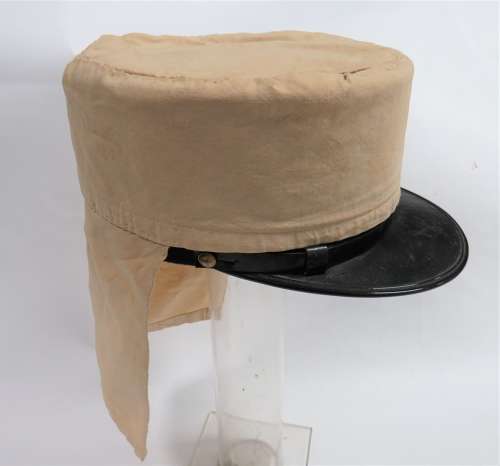
You had five minutes before the school the other side of our rugby pitch and their electrified fence, had their own bell rang.  Five minutes to leg it to the sanctuary of the bus stop, before your cap was either nicked, knocked off or made into a gag or, from some of the more creative boys, a doily.

Nearly fifty-years on since I left school for the last time, 4.10 pm still has a magic ring about it.  A sense of relief.  A time when I decided, shall I play football, perfect my leg-break or conjugate a few Latin verbs?  

TV, aside from just Crackerjack, taught you the time and numbers.  Six-Five Special taught you how to count backwards, as did 3,2,1; Beverly Hills 90210 introduced very big numbers; Blake’s 7 catered to the less numerate; Patrick McGoohan was determined not to help at all.

Although I can’t remember when News At Ten was on.
Clocking in

Growing up, I would listen to aged relatives (it was that, or have your pocket money come to an abrupt halt) and wonder if any of them were related to Stanley Unwin?

I had a paternal grandfather who, if you asked him a question, would always answer with: “I’ll tell you for why”.  He was from north London, so perhaps, having been brought up south of the River, having far too many prepositions in a sentence was considered the norm?  Or perhaps he was a precursor to Google Translate? To paraphrase the Catchphrase catchline – “it’s good, but it’s not right”.

Where cab drivers dare not go after 8.00, my maternal grandmother, when asked the time, would answer: “five and twenty past” or “five and twenty to”.   Is this a generational thing and people in SW17 were taught to speak as if they were still living in Georgian London?

I bet, these days, no one is told “wait ‘til your father gets home”; as, with the advent of working from home, most fathers are already home, albeit working in a room which originally housed coal.

With raging inflation, I wonder much people should be paid for their thoughts?  Certainly not a penny.

And you didn’t have to do seven-years at medical school to give someone a taste of their own medicine.

Curiosity has been reported to the RSPCA.

Enjoy – or the rabbit gets it

In the Balham ABC, during the ‘60s and ‘70s, the ladies serving the tea – which they poured from a great height above their heads – would slide the mugs across the metal counter; no words would be exchanged. You certainly didn’t say, “this tea has more of a head on it than my mum’s Guinness”.  If you did, you’d find yourself, and your accompanying iced bun, in A&E. 

What the tea ladies never said was “Enjoy!”  Nor did they say it, which seems commonplace in coffee shops nowadays, with incredible menace.

There is clearly no alternative to not enjoying it.   If you don’t, the barista will find you and creep up beside you, as you’re devouring your blueberry muffin.

They will ask, if you had to state your level of enjoyment on a scale of one to ten, it must be eleven. Or else! 

Iced buns were the only pastry option in the ABC on Balham High Road.  There were no croissants as many of the people serving there still had very raw memories of the Hundred Years’ War; the thought of having to speak French was abhorrent.  These were the days before sell-by dates. If you couldn’t eat it, you could use it as a weapon and reenact the Battle of Agincourt on Balham High Street.

Legion’s disease

I was ten when my parents left me in a hall I’d never visited before; with kids I’d never met; playing games of which I’d never heard.

Was this some sort of punishment?  Had I been awful in a previous life?  Was this Karma for not tidying my room once too often?

I stood (and wished it was a burning deck, such was my desire to be somewhere else) by the entrance of this hall near Tooting Broadway. 

“Ok, Michael, have fun, we’ll see you in a few hours”.  

Was this what it was like when you joined the Foreign Legion?  Being in the British Legion club was clearly the first step.   My parents had signed a document ensuring I’d be in Marseilles before sunset.

The other kids clearly all knew one another from their schools; Cubs/Brownie packs or the Balham & Tooting sub aqua club for under tens.   I knew no one.  Even my imaginary friend was away for the weekend.  This was one of the few times I regretted being an only child.  If I had known, I’d have bought a sibling off the Freeman’s catalogue.

The pain went on for several hours.  I took part in none of the games.  I spoke to no one.  I hid in the toilet so many times, one of the adults asked if there was a urologist in the hall?

After four hours my parents returned.  I was given a piece of cake.  I did say thank you, but also told the organiser – thrusting my Victoria Sponge towards his face – “this is how revolutions begin”.

Tiger, tiger – hiding in my grass

It is “No Mow” May.

This is blindingly obvious if you step outside your house and are confronted with what appears to be Epping Forest; no one has mown the communal streets seemingly since the last Ice Age.

I never had “No Mow” Any Time Period growing up in my fourth-floor Balham flat.  Mowing wasn’t easy, four floors up.  We were so far up, off the ground, it was more fly-past then Flymo.

I’m wondering, when they eventually get round to cutting the Serengeti-type grass outside my house, what they’ll find?  Butterflies; bees; beetles?  Most certainly.  However, it has grown so high I wouldn’t be surprised to see hordes of wildebeest; the lost city of Atlantis or The Borrowers living there.

In the ‘60s, I’d wander over Wandsworth Common with my Observer Book of Birds.  During this time, it seemed south-west London only attracted pigeons and sparrows.  I was twenty-eight before I saw my first robin – unless you count Burt Ward.

My father, having been brought up in Marylebone (famed for its birds of paradise), got very bored trying to bird-watch with me, so we used the book as a goalpost. 

From trying to be Peter Scott, I hastily had to become Peter Bonetti.  Equally handy trying to spot cats.  And talking of cats, outside my house, I could have a family of Siberian Tigers living in the undergrowth.  This would explain why Siegfried and Roy have moved in next door.

Eva Brown

In the kitchen of our Balham flat in the ‘60s, my mother had eight brown jars containing all manner of exotic foodstuffs: ginger; cloves; nutmeg; cinnamon; marjoram; mint; parsley and thyme. 

Because of my utter loathing of boiled fish in parsley sauce, I’d hide the jar marked “parsley”.  I couldn’t watch any episode of The Herbs without the fear of coming out in a rash.

What puzzled me, as a kid growing up, was why the contents of these jars were never used? 

My diet was very formulaic; I had the same thing most days; most weeks.  But cannot remember my Saturday evening smoked haddock being supplemented with a sprinkling of nutmeg; Sunday’s roasts rarely featured ginger instead of Yorkshires – and whose cloves were actually in that jar?  The Borrowers? (At this point I’d not learned how to spell “clothes” properly).

Brown was a popular colour in our flat:  Brown three-piece suite; brown carpet – with both parents being heavy smokers, it tended to hide the burn marks (and an unruly Flake packet); brown coffee pot; brown cups and saucers; dark brown sideboard and stereo.  The only brown not there was Eva Braun.

My dad had a brown suit.  He could hide his head in his jacket and my mum wouldn’t spot him sitting on the sofa for hours.  

So, when sometimes says to you, “brown is the new black”, send them off for a colour blindness check.

Pomp and circumstance in Balham

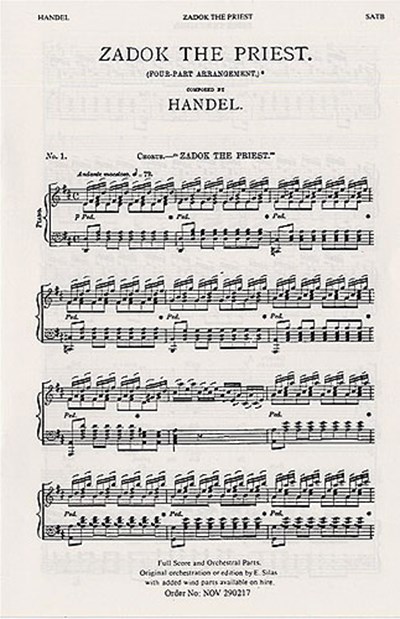
Listening to “Zadok the Priest” last week during the coronation, reminded me of one of the many times I’d sung it.

To celebrate various Royal happenings during the 70s, our Balham church twice put on pageants.

Because I could sing and act I was involved in both.

Having won the RE prize when I was ten, I believed I was a shoe-in for any major acting part (in fairness, this should have been given to Neil Pearson, a Tooting resident when we were all growing up – and marginally better actor).

We regularly inflamed the vicar’s anger by messing about during rehearsals.   This wasn’t helped by one line in a sketch where the vicar’s daughter had to deliver a line: “Peter, pass me your crutch”.  When you’re a teenager, and you hear the word “crutch”, it’s similar to hearing the word “sausages” when you’re six.  Sadly, for the vicar, we were all still mentally about six.

We sang many choral pieces in the two pageants – all of them related to royalty. But, for me, the best thing to come out of it was through a fellow chorister from Jamaica.  During the rehearsals and singing “may the King live forever”; “amen, amen, amen” and “alleluia” more times than you can shake a stick at, my West Indian mate taught us the entire lyrics to “The Israelites”.

If the vicar had known he’d have torn up our shirt and taken away our trousers, as the great Desmond Dekkar suggested.

Wall to wall entertainment

Music was very important to me growing up.  The bedroom wall in my Balham flat was bedecked with singers cut out from Fab 208.  The life-sized picture of Clodagh Rogers did dominate the wall; this didn’t leave much room for Melanie, Aretha Franklin or Nancy Sinatra (nothing wrong with having eclectic musical tastes).

I’d inherited some records from my grandparents: the 1939 classic “Underneath the spreading chestnut tree”; “Caruso’s greatest hits” and a full set of Gilbert & Sullivan operettas.  Therefore, the desire to have my own music was paramount.

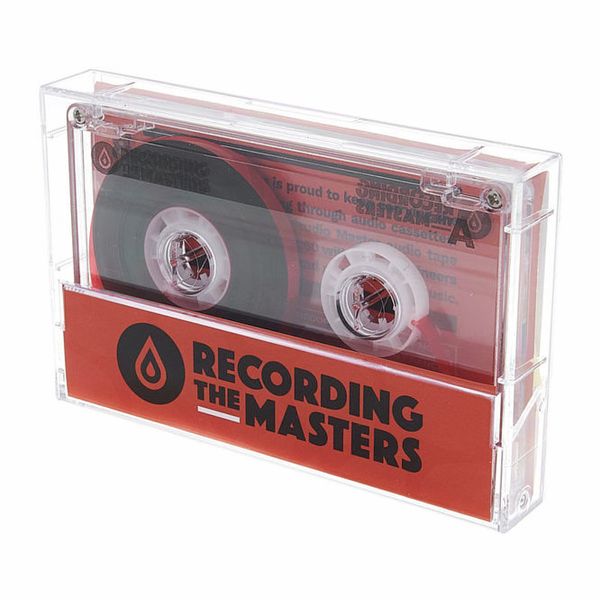
I bought a cassette player.  I also bought several C60 tapes to record on.  I declined to buy a reel-to-reel tape as I believed this would make my bedroom look like the IBM building. 

I’d plant my microphone in front of the TV during Top of the Pops – sadly I’d not only record the song, but I’d also record my mother asking “what’s this bleedin’ row?” .  DJs on the radio would interrupt the songs by talking over the start and finish of songs.  At night, I’d try and record the Radio Luxembourg top 20 underneath my candlewick.  My mother would enter my room (without knocking) and say “I hope you’re not doing what I think you might be doing?”  I was ten and my eyesight was bad enough.

Eventually, as I got older, and with more pocket money, I could buy actual records.  I’d buy the Top of the Pops and Hot Hits albums.  My mother knew why.

Bugger Bournemouth

In 1963, when I was six, I visited Bournemouth.  I vowed never to visit again.  The trip from my Balham flat to the Dorset coast was a succession of disillusionment.

There’s nothing wrong with Bournemouth per se, but my multiple bad experiences there left me very biased against it – however Alan Whicker may have praised it in future programmes.

This was the first holiday I can remember. I stayed with my paternal grandmother in a rented flat by the beach.  My grandmother had a food allergy – insomuch as she was a dreadful cook.

On my first visit to the seaside I was stung by a bee.  This was very painful; the only way my parents would calm me down was promising me a part in the next series of Emergency – Ward 10.

In the sea there was a boy of similar age.  I asked him if he knew Keith Ranger (a boy in my class)?  I was amazed and hugely disappointed that he didn’t.  Even his parents explaining that this random child went to school in Leeds still made the fact incomprehensible.  It was only, several years later, when I purchased my first Red Rover, I realised that the morning commute from Leeds to Balham may have been tricky.  Especially if you missed the connection at Nottingham Bus Garage.

During my “holiday” my maternal great grandmother died.  I was told she had gone to join the angels.  I was about twenty when I realised, not having seen her for a while, that “The Angels” were not a pop group who were on the road a lot.

I’ve got some lovely plums

There was no scanning of items in the Du Cane Fruitier, the greengrocers opposite where I was brought up on Balham High Road in the ‘60s.

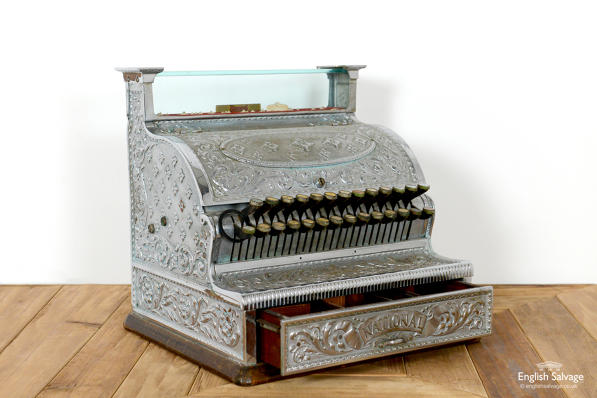
What there was was a giant, dirt-covered cash register where, if your bill came to anything involving a halfpenny, you’d need several hands to press the keys down to display the amount.

There was no “bag for life”.  You had a string bag, a bag you’d bought years ago during a holiday in Ventnor or a basket on wheels. 

Rather than you packing the fruit and veg, they’d be poured into your bag.  If you were lucky they’d be wrapped in a paper bag, so flimsy, it would have disintegrated by the time you’d transferred your purchase into your vegetable rack.  The greengrocer was determined to get you as earth-covered as he was;  I think they were on commission from Lux, Camay or the local pumice stone makers.

I loved the signs in the greengrocers, especially as I was very short-sighted as a kid.  I couldn’t miss the six-inch high white sign displaying 1/6 in some gothic script.

My mum would invariably do the shopping in hot pants.  Looking back, the greengrocers must have thought I was a bit of a hinderance, especially as my mum would insist I was her little brother.

To be fair, she never went to look at the special cauliflowers they kept out the back.