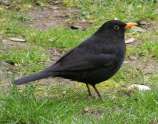
Russian fly in the ointment

thrush

I was seven when The Man from U.N.C.L.E. first aired on the BBC.  I immediately wanted to be Napoleon Solo and sent off to become a member. A few days later, with membership card proudly in my hand, I believed I would be a master spy before I took my Eleven-Plus.

During the series I always had my concerns about Solo’s sidekick, the enigmatic Illya Kuryakin; consequently, I wasn’t really surprised when he popped up, dressed as a British RAF officer, in Colditz – but that’s why Russian spies are so clever and clearly have a variety of seamstresses working tirelessly in their Gulags.

As a seven-year-old the name of U.N.C.L.E.’s nemesis, T.H.R.U.S.H., meant nothing to me. I’d yet to buy my first Observer Book of Song Birds and was unlikely to contract any sexually-transmitted disease (mainly because my mother told me never to sit on any strange toilets).  Looking back, Napoleon and Illya were unlikely to quash their arch-enemy by rubbing a soothing ointment on them.  Although eradication was the name of the game, I guess.

The show which rivalled The Man from U.N.C.L.E. on ITV was Danger Man – I also wanted to be John Drake and would stalk the corridors of my Balham block of flats seeking out enemies of the state (I suspected most of the cleaners and believed that inside their mops lay a selection of east European munitions).

Danger Man would occasionally feature cameo roles from famous actors, one episode featured John le Mesurier; I never wanted to be Sgt Wilson, but in increasing old age, can identify with Private Godfrey and his constant desire for the toilet; today I am more great uncle rather the Man from!


Personification of Evel

puch

I think it was Evel Knievel who once said: “You wait ages for a London bus, then fourteen come along at once”.  I was, despite owning a moped aged 16, never destined to follow the exploits of the master bus-vaulter.

In 1972, aged 15, my parents emigrated from Balham to Carshalton (it could have been Neptune, it seemed so far away). Transport back to family still in Balham would be a problem so my dad said he’d pay for me to get a motorbike.

Armed with a selection of Premium Bonds, illegal Singapore currency my dad had brought back after National Service and a handful of pretend coins from the Co-Op, I travelled back to SW17 to purchase a Harley Davidson.  Sadly, they never produced a range of mopeds, so an Austrian-built Puch Maxi S was procured.

The shop I visited on Garratt Lane, Tooting was called Elite Motors. Growing up in 60s/70s south London, “elite” wasn’t a word we’d heard much, so we unwittingly called the shop “e-lights” (the shop is probably now selling vaping mechanisms).

Elites did well out of me; I bought three bikes there. However, I was more Mr Sheen than Barry Sheene and after a succession of minor accidents felt there was some supreme being telling me it was time to learn to drive.

On my travels back and forth from Balham to Carshalton, I remember vividly riding through Mitcham Common and the temperature dramatically dropping several degrees. I could have ridden blindfold and known exactly where I was – although this would have consequently entailed more arguments with the bridge over Mitcham Junction Station!

I miss not having a bike, although my most embarrassing biking moment is still etched in my brain: having toppled over at Amen Corner, Tooting, I was asked by a frail, old woman if she could help get my bike upright again? It was at this point when I realised that old people act as very good fulcrums!

I won’t ever be attempting vaulting over buses any time soon as my Red Rover is about to run out.

Not a sniff

pollen

Hay fever was the reason I failed my O-levels. I should know, I’m a doctor, well, I once owned a plastic stethoscope from a 1960s doctors and nurse kit.

The hay fever season has returned to these shores (probably from Russia); I remember back to being sixteen in 1973, sitting my O-levels and contracting, for the first time, Allergic Rhinitis – which is the correct medical term for hay fever and not the name of the cross-eyed rhino in Daktari.

My desk, inside the hot, imposing, alien school hall on Battersea Rise, looked more like a chemist’s than a work station. If I’d had a bottle of ointment to treat marsh ague, some pampers and a box of prophylactics I could have rivalled Balham Boot’s!

I’d never had hay fever before and went to every exam armed with pen; Piriton; a Penetrol inhalant – which unblocked noses with power like that of a flame thrower; paper hankies; cloth hankies – all with a big “M” on (and a diagram of an oxbow lake, which I’d sewed on the night before my Geography O-level) and lucky (or not in this case) Gonk!

I also had a slide rule which proved more useful during my music O-level – underlining the name Chopin – than it did when I sat my maths O-level!

Despite having a desk which resembled that of a fifteenth century alchemist (I could turn base metal into Kleenex) I didn’t do very well with my science exams.  Not so much not knowing my arse from my elbow, I didn’t even know my amoeba from my elements tables.

Gesundheit!

It’s in the jeans

nun

I’ve never owned a pair of blue, denim jeans.

I’m probably in that 0.01% of the world’s population where a pair has never been in my wardrobe, but I was never realistically given the option.

Rather than spend money on a pair of Levi’s or Wrangler’s, the only option to me was the Tesco Home ‘n’ Wear on Balham High Road.

As a teenager in the early 70s, I earned no money, so was reliant on my mother as my clothing benefactor. This benevolence sadly only stretched the 500-yards from our flats on Balham High Road to the non-food Tesco shop further down the road – not for me anything from Reno, Nevada or Greensboro, North Carolina!  Tesco Home ‘n’ Wear, Balham was the only choice.  A consequence of this non-option was that I never owned a pair of blue denims from a famous brand.  The only thing shrinking in my bath as a teenager might have been blue, but certainly wasn’t made out of denim.

The same fate struck me with shirts. I so wanted a Ben Sherman shirt; the option I was given was one from Trutex (might as well have been Artex – arguably more fashionable and at least I could have covered my ceiling with it).

Trutex was to Ben Sherman what Hot Hits and Top of the Pops records were to the songs’ original artists.  Similar, but the collar, designed like the hat on The Flying Nun, gave it away that it was not the real thing!

I’ve never been that fashion conscious – probably scarred by the disastrous Haute Couture forced on me as an adolescent.  To me, as a teenager, a Kaftan was a dog known for its long, shiny hair; flares were things you activated if marooned at sea and (until Eurotrash was aired on Channel 4) I thought Jean-Paul Gaultier was the best full back Paris Saint Germain ever had.

A complete gîte

lighter

Having avoided being sent to elocution lessons when I was ten in 1967, my first taste of foreign languages, aside from my Nan speaking in rhyming Cockney slang to confuse her neighbours, was a year later at secondary school where they tried to teach us French.

Day trips to Dunkirk and Boulogne didn’t help; although did introduce us to cigarette lighters whose flames made oil rigs in the North Sea look tame – and flick knives.

But this was hardly immersion.  The only immersion likely was us trying to dump our Divinity teacher overboard just pulling out of Dunkirk harbour.

During our French lessons we were instructed solely to conjugate verbs. Because that happens in everyday foreign languages – Not!!  Whenever, trying to buy a fresh baguette on holiday in a gîte in a town which formerly housed U-Boats, you will not be saying to the Boulangerie, “I bake, you bake, he, she or it bakes, you bake (several of you baker types), we bake, they bake” you are English and, therefore, you speak slower and slightly louder, as if the baker is slightly mutton: “Have. You. Got. Any. Bread?”

Latin was just as bad. And useless, unless you wanted to study etymology or become a Personal Trainer.  Most Latin lessons involved us reading books about wars involving towns/cities/nations being taken by storm.  We learned the Latin verb expugnare – to take by storm.  I cannot remember, since my last Latin lesson in 1972, ever using the words “to take by storm” – although if I’d have supported Millwall that might have been different.

But, because English is the universal language, all we need to do is go to an evening class and learn how to say, in several languages: “Two beers, please”, “Where is the nearest chemist?” and “I think my clutch has gone!”

Auf wiedersehen, pet.

Waiting for a queue

waterloocitydepot

Have people stopped queuing for public transport? I’ve been promising myself, since 1974, the year I started commuting, to attend a “travelling in London” assertiveness course; it would seem this is becoming ever more urgent.

On the platform at Bank Station, connecting the Waterloo & City Line to Waterloo, there are markings behind which people would, with their rolled-up umbrellas, bowler hats and copies of the Times, wait patiently for the Drain as it is affectionately called, to arrive.

Not any more they don’t, plus the umbrellas have been replaced by invisible-to-the-wearer back-packs (probably containing a small person), whose sudden movement can remove an eye before you can say Captain Hook. Oblivious, they carry on listening through their headphones to something like “The Clash sing Edith Piaf”.

The markers on the platform are still very much there, but their existence is spurned.

I’ve noticed too that people no longer queue at bus stops.

Historically you’d form an orderly queue behind the bus stop. These days people congregate around the bus stop, mimicking vultures in the Nevada Desert, mentally preparing themselves to see the word “Due”.  This three-letter word pumps adrenalin through passengers’ veins as they lie in wait.

The bus is spotted and it is as if someone angelic host has said “On your marks…”, as there is an almost indiscernible shuffling towards where the bus door will open. The bus arrives and the ensuing pandemonium is on a par with a Boxing Day sale where tellies are suddenly available for under a shilling.

Planes are now boarded by the number on your ticket, this should be introduced for buses with priority given to people who never paid more than ten bob for a Red Rover.

Beaker people

peter bonetti

During the 60s and 70s, petrol stations started offering gifts when purchasing fuel; this was a relief for those into collecting memorabilia, but living somewhere where a vintage petrol pump might dominate the lounge.

The advantage being that 1970 World Cup coins were smaller than the actual pumps.

(I wrote about the advent of loyalty points last week at https://mikerichards.blog/2018/02/10/stamps-of-authority/)

There was an Esso garage on Balham High Road where my parents would fill up our Ford Poplar. I would as, a thirteen-year-old football fanatic, insist on visiting this garage; it was the only way we’d ever get Peter Bonetti into our flat!

As the years progressed (and you were prepared to queue for days during the 1973 oil crisis) you could collect glasses. I can only assume the principals at Standard Oil and British Petroleum believed that people in the UK, whilst owning cars, failed to possess a drinking receptible and were visiting tributaries of the Thames to drink water with their hands.

Soon many houses I visited had sets of glasses out of which you’d drink your squash; although always mildly tainted with the taste of four-star.

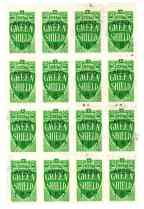
Some garages offered a dream, rather than faux cut-glass beakers, with the gratification of manifold sets of Green Shield Stamps; my parents would drive for miles looking for the biggest multiple.

Although, you’d easily swap several tigers in your tank for quintuple Green Shield Stamps.


Stamps of authority

green shield

I tried to get money out of an ATM the other day by mistakenly using my Kidney Donor Card; I had far too many loyalty cards in my wallet. I either needed to shed a few or buy a bigger wallet, a small travel bag or basket-on-wheels like my mum had.

There are very few shops these days where you’re not brandishing two cards – one to pay with and one to collect points. (Three, if you’re trying to break into the till).

Unlike in the 60s and 70s when you’d collect Green Shield Stamps or cigarette coupons, you knew exactly how much you had – eight and a half books or half a hundredweight of Embassy coupons. I wrote about this previously: https://mikerichards.blog/2017/01/03/gateway-to-the-south-revisited-2/

Because of this lack of knowledge of the worth on your loyalty card, I’m always hearing (predominantly in coffee shops): “Have I got enough points on this card?”, “No, you have 2p”. An ignominious silence descends.  In recovery mode, the question to the barista is: “Oh, where’s that flag from?” “Tuvalu.”  More silence.

But it is (no pun intended) rewarding redeeming points, even when you’ve paid over several hundred pounds to earn a couple of free Ginger Nuts in Costa.

Don’t get me wrong, these cards are useful; the alternative would be carrying around several bulging (freshly-licked) Green Shield Stamp books or several million Embassy coupons – you’d certainly need a bigger wallet – or a very strong elastic band.

I wonder, if I sold one of my kidneys, could I get the points put onto my Boot’s card?

There’s not an awful lot of coffee in Bal-Ham

coffee

When I was a teenager, growing up in the 70s, coffee was still regarded as relatively exotic; but it was just called “coffee”. In the Wimpy on Balham High Road one of the two hot beverages on offer was coffee; it cost 8p.  And tasted as such.

We rarely had it at home; we drank tea. I insisted on PG Tips being bought for the cards you got inside enabling me to learn about “British Butterflies”, “Adventures and Explorers” and “Notorious Nazis”.  I would force-drink my mother until I owned an entire set.

One day, my nan introduced me to coffee: frothy, hot, milky coffee. Although it smelled fantastic, it was far too hot to drink immediately – you’d needed it to cool down.  Because my nan had made the coffee by boiling milk in a saucepan (oddly enough she didn’t own a Gaggia machine) the moment it started to cool, a layer of skin would develop. This could be removed with a spoon although, hanging off the spoon, it looked like something out of the Quatermass Experiment!  It was enough to put you off coffee for life and why, I believe, lids are put on take-away coffee cups nowadays.

Today, courtesy of Messrs Costa, Starbuck and the Roman Emperor Nerro, there are copious amounts of choice of coffee, size of cup and type of milk. However, you’ll have needed to have attended several terms of conversational Italian evening classes to be able to pronounce cappuccino and latte correctly and a good grade at A-Level to order Caramel Macchiato. (It becomes easier – the more you have, the more your teeth have rotted away)

Still, in 1972, it was worth paying 8p for a cup of coffee, if only to dip your Wimpy Frankfurter into.

Arrivederci, Balham.

Whistler’s mother

WhistlersMother_0329

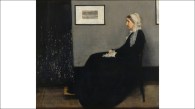
“Here he comes – Whistler’s mother” would be my nan’s retort as I’d skip through the dark corridors of Du Cane Court on Balham High Road where I lived until we emigrated to Carshalton in 1972.

I’d only whistle when happy and this would have coincided with me having talked to a girl – I would run down Balham High Road (I assumed no girls lived outside of SW17) whistling the main theme to Patton: Lust for glory.  I felt I was on top of the world, like the eponymous General George S Patton addressing the troops at the start of the 1970 film.

To demonstrate multi-tasking is not just a girl thing, I could bowl imaginary leg breaks whilst running and whistling!  Not unlike the kid in the 1982 Channel 4 film P’tang, yang, yipperbang – although he had John Arlott in his head, I had George C Scott chipping away in mine, like Jiminy Cricket (which is quite apposite).

If I’d have pursued this talent, rather than the more ostensibly glamorous route of being in advertising, I could have been the next Percy Edwards or Roger Whittaker. I could have released a re-worded version one of Whittaker’s famous ballads and written about leaving old Balham town.  Or copied Percy Edwards with some of his bird impressions.

My nan always said I was a bit of tit; I could have proven her right and sounded like one too!